

- 0
- 1,702 word
Almost every coffee shop in the United States has espresso on the menu. Cappuccinos, lattes, iced Americanos, and caramel macchiatos all start with a shot of it.
So what is espresso? Espresso is a concentrated coffee drink made by forcing hot water through finely ground coffee under pressure. The process produces a small, full-bodied drink with an intense flavor and a layer of foam called crema.
What is espresso?
Espresso is made by pushing hot water at high pressure through finely ground, compacted coffee. Drip coffee takes several minutes to brew. Espresso is usually extracted in about 25 to 30 seconds.
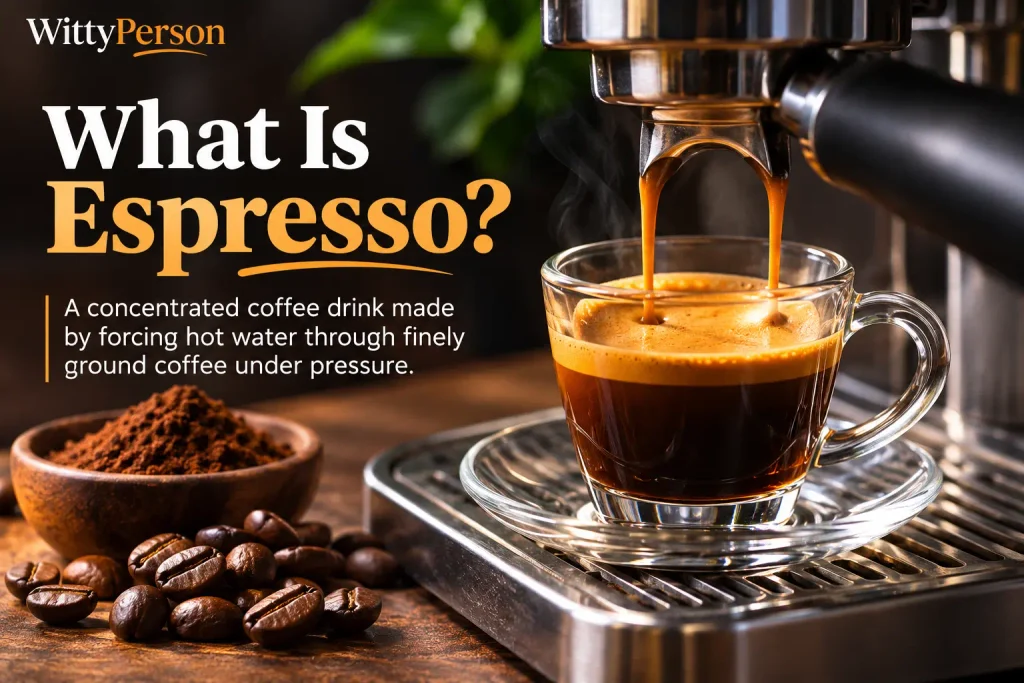
A traditional single espresso is about 1 ounce, and a double shot is about 2 ounces. Even at that size, it has an intense flavor and a thick texture.
On top sits the crema, a thin golden-brown layer that forms during extraction. It’s made of tiny bubbles and coffee compounds that add to the drink’s aroma and texture.
Espresso is also the base of lattes, cappuccinos, Americanos, macchiatos, mochas, and flat whites. When you order any of them, espresso is the coffee in the cup.
What is espresso coffee made of?
Traditional espresso has two ingredients: finely ground roasted coffee beans and hot water. The quality of both matters, and so does the brewing process.
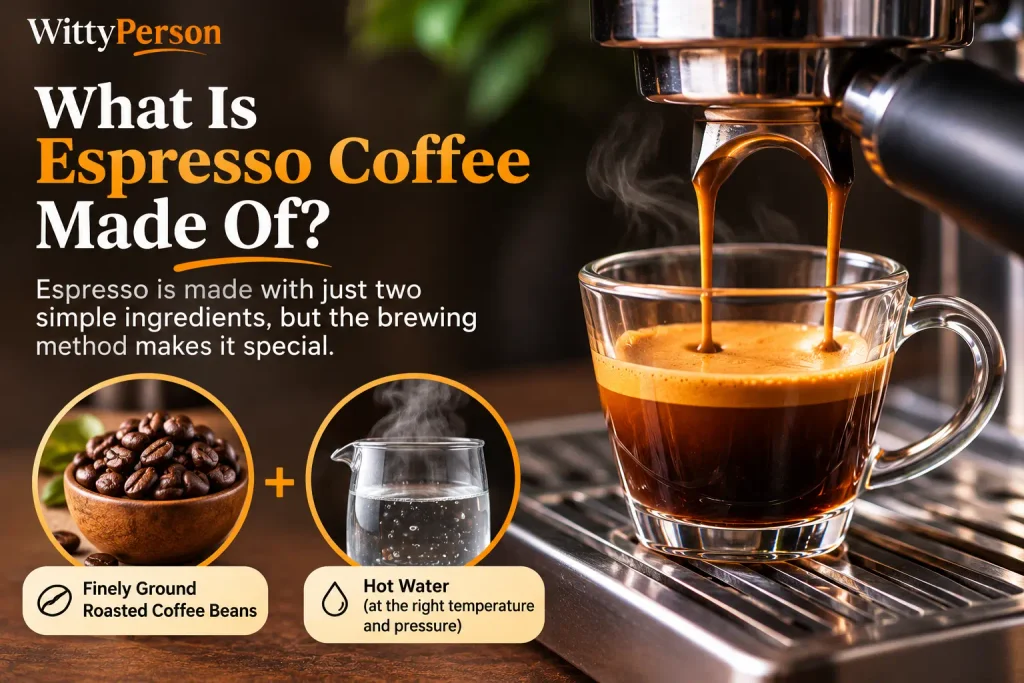
The beans can be different varieties and roast levels. They’re roasted, ground fine, and measured before brewing. The water should be clean and fresh and heated to the right brewing temperature, since both its temperature and its quality affect how the coffee tastes.
To brew, you put the grounds in a portafilter and press them down with a tamper. The espresso machine then forces hot water through the grounds under pressure, pulling flavor compounds, oils, and other soluble material into a concentrated liquid.
Traditional espresso needs no sugar, milk, cream, or syrup. You can drink it on its own or add whatever you like.
What makes coffee espresso?
The bean and the roast level don’t make coffee espresso. The brewing method does. An espresso machine pushes hot water through a tightly packed bed of finely ground coffee, which produces a concentrated drink quickly. Five factors set espresso apart:
- Espresso needs a fine grind, which gives the water enough resistance to extract flavor in a short brew.
- Traditional machines commonly use around 9 bars of pressure to push water through the grounds.
- A shot usually takes about 25 to 30 seconds to extract, though the ideal time depends on the beans, grind size, machine, and recipe.
- The amount of coffee affects both taste and concentration. Many double-shot recipes use about 16 to 20 grams.
- A well-extracted shot often develops a golden-brown crema. Crema is easy to spot, but it doesn’t guarantee the espresso tastes good.
What are espresso beans?
Espresso beans are coffee beans that are sold or chosen for making espresso. They aren’t a separate species. The same beans you’d use for drip coffee, French press, or pour-over can make espresso too. What differs is often the roast profile, the freshness, and how the beans are prepared for the brewing method.
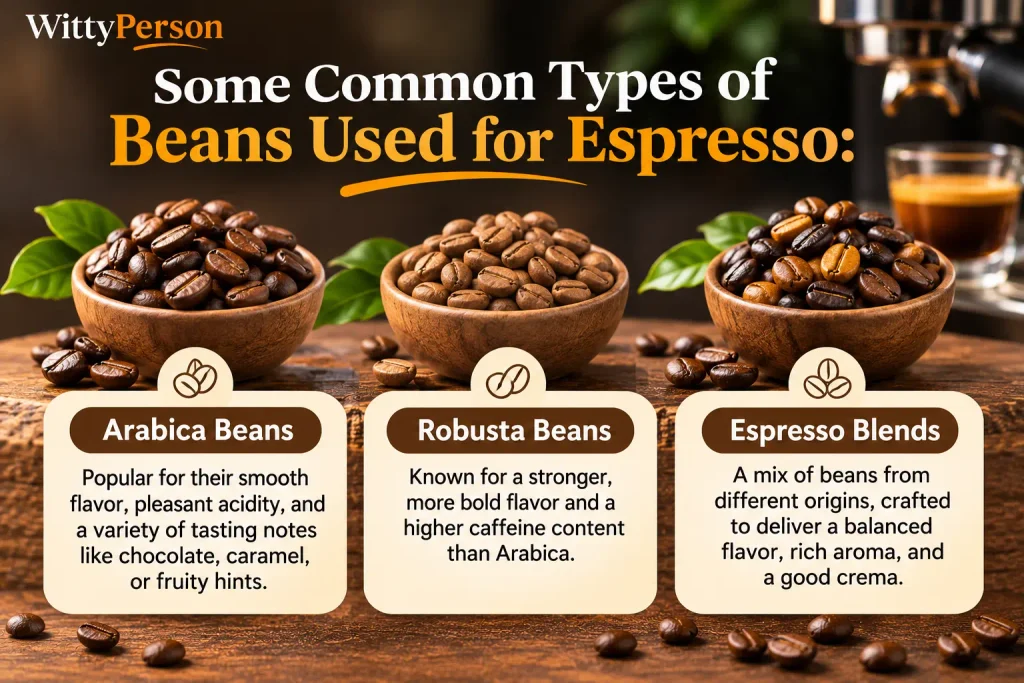
Some common types of beans used for espresso:
Arabica is popular for its smooth flavor and pleasant acidity. Depending on the origin and roast, it can taste chocolatey, caramel-like, nutty, or fruity.
Robusta has a stronger, more bitter flavor than Arabica and often contains more caffeine. Roasters sometimes blend it with Arabica to get a bolder espresso with a thicker crema.
Many roasters also sell espresso blends, which combine beans from different origins for a balanced flavor. Blends can taste chocolatey, nutty, sweet, or slightly bitter.
Which coffee roast is best for espresso?
Espresso works with light, medium, or dark roast coffee. Light roasts often have brighter acidity and fruity or floral flavors. Medium roasts balance sweetness, acidity, and body. Dark roasts often taste bold, smoky, chocolatey, or bitter.
No single roast is best for everyone. Pick the one that matches how you want your espresso to taste.
What are espresso shots?
An espresso shot is a small serving of concentrated coffee made through the espresso process. A barista may ask whether you want a single or a double, which refers to how much espresso goes into your drink.
| Espresso type | Approximate volume |
|---|---|
| Single shot | 1 ounce (30 ml) |
| Double shot | 2 ounces (60 ml) |
| Triple shot | 3 ounces (90 ml) |
These sizes are estimates. Actual volumes vary with the café, the machine, and the recipe.
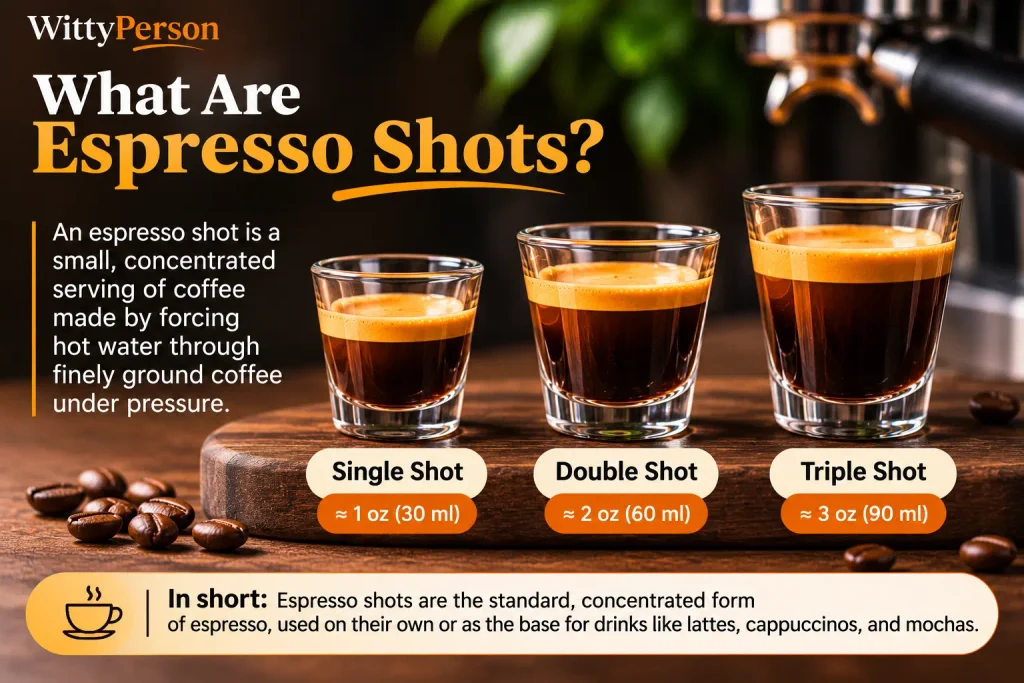
Double shots are widely used in American coffee shops, especially for milk-based drinks such as lattes and cappuccinos. You can drink a shot straight from a small espresso cup or use it as the base for other coffee drinks.
How much caffeine is in an espresso shot?
A single shot typically has about 60 to 75 mg of caffeine, and a double about 120 to 150 mg. The amount shifts with the beans, the dose, and the extraction. Robusta, for example, generally has more caffeine than Arabica.
Difference between coffee and espresso
Espresso and regular coffee both come from roasted beans, but they differ in preparation, serving size, flavor, and concentration. The biggest difference is the brewing method.
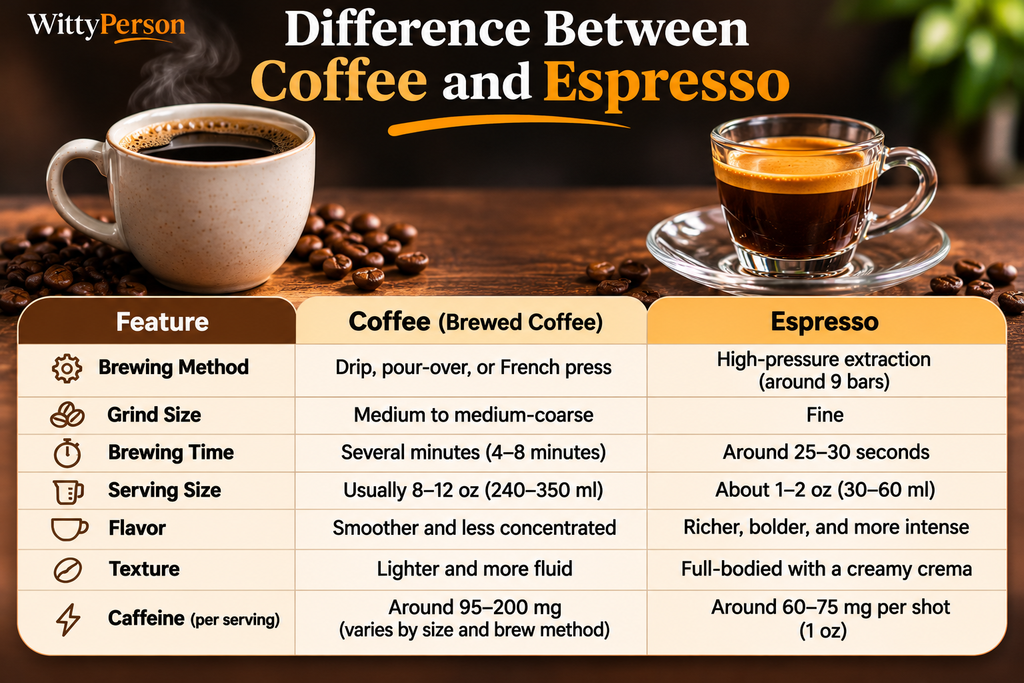
Regular coffee is commonly made with a drip coffee maker, a French press, or pour-over equipment. In these methods hot water passes through the grounds or steeps with them over a longer period. Espresso uses high-pressure extraction to make a smaller, more concentrated serving.
| Feature | Espresso | Regular drip coffee |
|---|---|---|
| Brewing method | High-pressure extraction | Dripping or filtration |
| Grind size | Fine | Medium to medium-coarse |
| Brewing time | Around 25 to 30 seconds | Usually several minutes |
| Serving size | Around 1 to 2 ounces | Commonly 8 to 12 ounces |
| Flavor | Concentrated and intense | Usually less concentrated |
| Texture | Full-bodied | Generally lighter |
| Equipment | Espresso machine | Drip coffee maker or other brewer |
Is espresso stronger than regular coffee?
Espresso usually tastes stronger because its flavor is more concentrated, but flavor and caffeine are separate questions. A single shot can have less total caffeine than a 12-ounce cup of brewed coffee, because the shot is so much smaller. Per ounce, espresso generally has more caffeine. Per serving, brewed coffee can have more.
How is espresso made?
To make espresso at home you need an espresso machine, freshly roasted coffee beans, a grinder, a tamper, and a small cup. The basic process:
- Start with fresh whole beans. Arabica, Robusta, or a blend all work, depending on the flavor you want.
- Grind the beans fine. Espresso needs a finer grind than most other brewing methods.
- Measure your dose. For a double shot, many recipes start with about 16 to 20 grams of ground coffee.
- Add the grounds to the portafilter and spread them evenly. Press them into a flat, level puck with the tamper.
- Lock the portafilter into the machine, set a small cup underneath, and start the machine so hot water pushes through the grounds.
- Stop the extraction when the espresso reaches the volume you want, and serve it right away.
Your first few shots may not taste right. Adjusting the grind size, dose, and extraction time will help you find a better balance.
Popular types of espresso-based coffee drinks
Its concentrated flavor makes espresso a good base for many hot and cold drinks:
- A latte is espresso with steamed milk and a light layer of milk foam.
- A cappuccino is espresso with steamed milk and a thicker layer of milk foam.
- An Americano is espresso diluted with hot water, which makes a drink about the size of regular black coffee.
- A macchiato is espresso topped with a small amount of milk or milk foam.
- A mocha is espresso mixed with chocolate and milk.
- A flat white is espresso with steamed milk and a thin layer of microfoam.
- An iced latte is espresso poured over ice and milk.
If you like bold flavors, try a straight espresso or an Americano. If you prefer something creamy and smooth, a latte or cappuccino is a better fit.
Is espresso a good choice for everyday coffee drinkers?
Espresso works well if you like concentrated coffee in a smaller serving, and it’s flexible: you can drink it straight, add hot water, mix it with milk, or use it in iced coffee recipes.
Caffeine is worth keeping in mind. Several shots over a day add up, especially alongside other caffeinated drinks. For most healthy adults, the FDA cites 400 mg of caffeine a day as an amount not generally associated with dangerous negative effects. Tolerance varies, so pay attention to how caffeine affects your sleep and comfort.
Final thoughts
Espresso is a concentrated coffee drink made by forcing hot water through finely ground coffee under pressure. It’s often thought of as stronger coffee, but what defines it is the brewing method, the concentrated flavor, and the small serving size.
The same shot can become a latte, a cappuccino, an iced drink, or an Americano.
Frequently asked questions
Is espresso stronger than coffee?
Espresso tastes stronger because it’s more concentrated. A full cup of brewed coffee can still have more total caffeine than a single shot, because the serving is so much larger.
How is espresso different from coffee?
The main difference is the brewing method. Espresso is made by forcing hot water through finely ground coffee under high pressure, while regular coffee is commonly made by drip brewing, pour-over, or steeping. Espresso is also served in smaller, more concentrated portions.
Is espresso just a shot of coffee?
A shot is the standard serving of espresso, a concentrated type of coffee, but it isn’t regular coffee in a small cup. Espresso is made with finely ground coffee and high-pressure water extraction.
What is the point of espresso coffee?
Espresso gives you concentrated coffee with a rich flavor and a full-bodied texture. You can drink it on its own or use it as the base for lattes, cappuccinos, Americanos, and macchiatos.
Author

piyushsaini31@gmail.com
Related Posts
Chicken Vindaloo Recipe: Easy, Tangy & Spicy
- 0
- 1,290 word
Chicken vindaloo pairs tender chicken with garlic, warm spices and a sharp vinegar tang. This version uses familiar US ingredients, and you...

What Is Burrata? A Guide to Italy’s Creamy Cheese
- 0
- 1,728 word
If you’ve seen a soft white cheese served beside ripe tomatoes or spread over warm bread, you may have wondered: what is...

How to make iced tea at home (classic, sweet, and cold brew)
- 0
- 1,727 word
Americans drink a lot of iced tea. In 2024 they went through about 86 billion servings of tea, or roughly 4 billion...
Read out all
How to Make Tea: An Easy Guide for a Better Cup
- 0
- 1,766 word
A good cup of tea doesn’t require special equipment or a complicated routine. Start with fresh water, use the right amount of...
Read out all
Malai Kofta Recipe
- 0
- 1,398 word
Restaurant-Style Curry with Creamy Gravy A plate of soft, melt-in-the-mouth koftas covered in rich, creamy gravy is hard to resist. Malai Kofta...
Read out all