
- 0
- 1,622 word
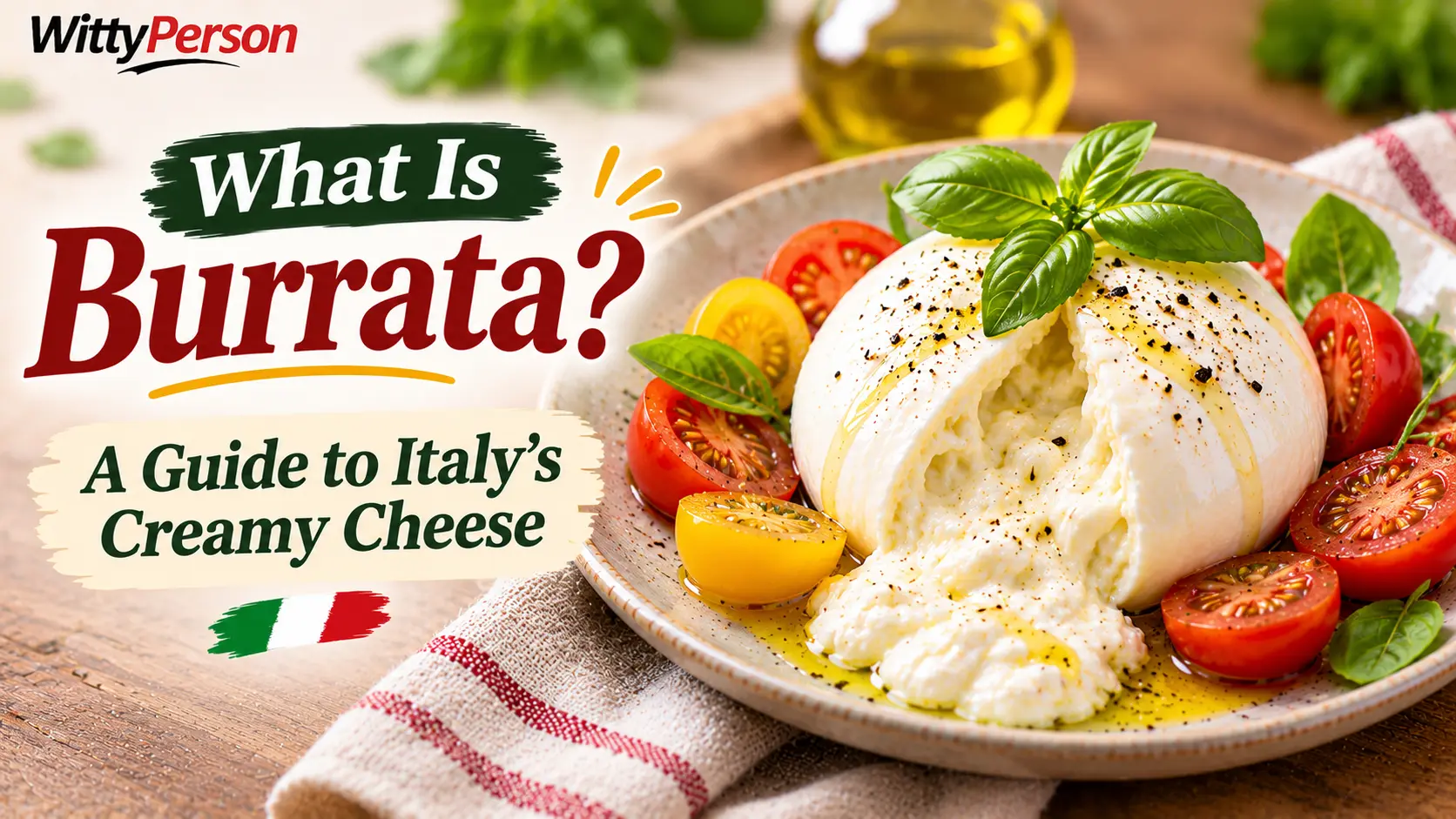
If you’ve seen a soft white cheese served beside ripe tomatoes or spread over warm bread, you may have wondered: what is burrata? It’s a fresh Italian cheese with a tender mozzarella shell and a rich, creamy center. Cut it open and the filling spills out, bringing a silky texture to salads, appetizers, pizza, and more.
Burrata may look like a ball of fresh mozzarella, but the two cheeses eat differently. Mozzarella is pleasantly springy and mild; burrata pairs that same gentle flavor with a soft center made from cream and cheese curds. Here’s how it’s made, what it tastes like, and how to enjoy it at home.
What Is Burrata?
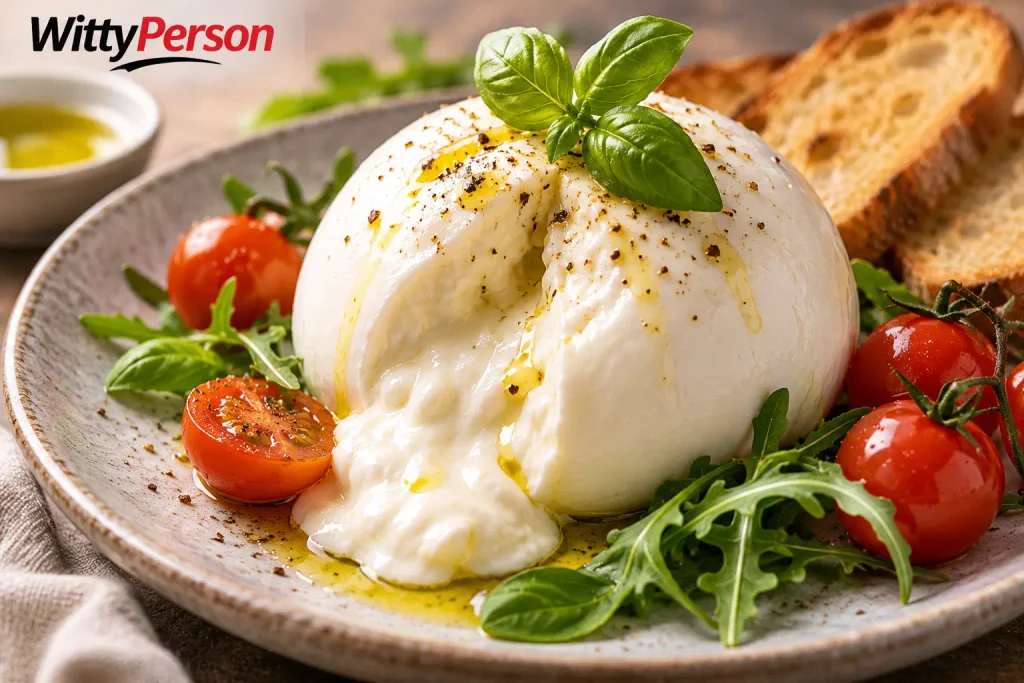
Burrata is a fresh cheese that originated in Puglia, a region in southern Italy. It’s usually made with cow’s milk, although some versions use water buffalo milk. A simple way to define burrata is as a mozzarella pouch filled with cream and delicate strands of fresh cheese curd.
The outer layer is stretched mozzarella, shaped into a pouch and sealed at the top. Inside is a mixture commonly called stracciatella: shreds of mozzarella curd combined with cream. When you slice the pouch, the filling spreads across the plate.
Burrata is sometimes described as “buttery,” and its name is connected to the Italian word burro, meaning butter. That describes its rich texture; burrata does not contain butter. It’s a dairy cheese made from milk, curds, and cream.
Is Burrata Mozzarella?
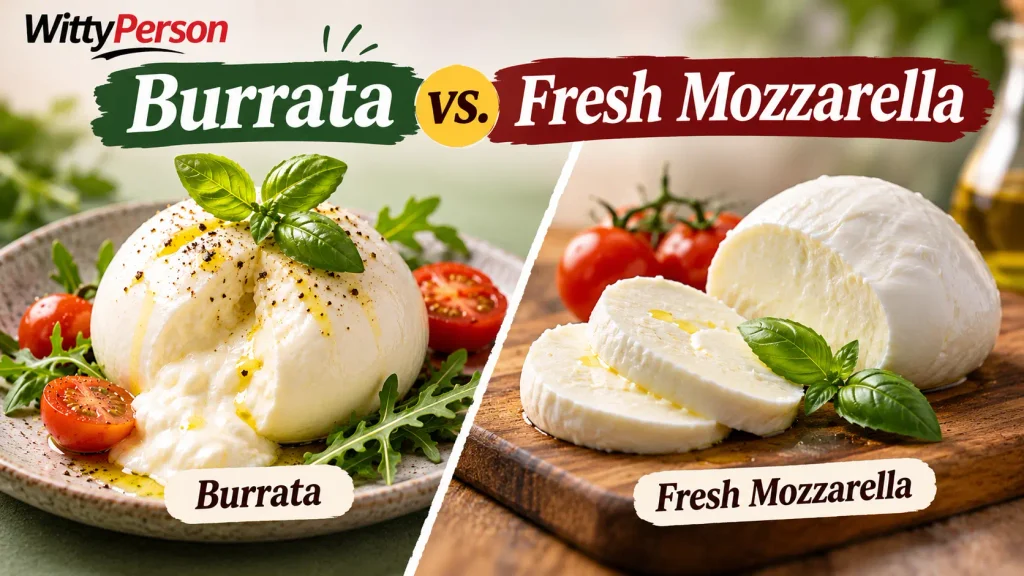
Burrata is made with mozzarella, but it isn’t the same as a plain ball of mozzarella. The shell is mozzarella, while the center adds cream and loose curds. That filling is what makes burrata softer and more luscious inside.
Burrata vs. Fresh Mozzarella
| Feature | Burrata | Fresh mozzarella |
|---|---|---|
| Structure | Mozzarella shell with a creamy center | Solid throughout |
| Texture | Tender outside, soft and flowing inside | Springy, moist, and smooth |
| Flavor | Mild, milky, and rich | Mild, milky, and clean |
| Best for | Serving whole, then opening at the table | Slicing, layering, or melting |
| Typical pairings | Tomatoes, fruit, toasted bread, greens | Tomatoes, basil, sandwiches, pizza |
Both cheeses are fresh and mild, so they work with many of the same ingredients. Choose mozzarella when you want neat slices or a cheese that melts evenly. Choose burrata when you want a creamy centerpiece or a soft topping that mingles with the rest of the dish.
What Is Burrata Filling?
Burrata filling is a mixture of fresh cream and torn mozzarella curds. The curds give it a delicate, stringy texture, while the cream makes it soft and spoonable. This filling is called stracciatella the same name used for the creamy cheese mixture sold on its own.
When you cut into burrata, the center may ooze out or settle onto the plate. That’s part of its appeal. Use bread, vegetables, or pasta to scoop up every bit.
What Does Burrata Cheese Taste Like?
Burrata tastes mild, fresh, and milky, with a rich, buttery quality from the cream. The shell has a soft, slightly elastic bite, while the filling is smooth and almost spoonable. It isn’t usually sharp or strongly salty, so its flavor leaves room for the foods served with it.
A little salt, black pepper, and good olive oil can bring out its flavor. Sweet tomatoes add freshness; toasted bread adds crunch; peaches or berries provide a juicy, sweet contrast. Burrata is rich, but its gentle taste makes it easy to pair with both savory and sweet ingredients.
How Is Burrata Made? Step-by-Step Process
Burrata is a traditional Italian cheese made using fresh mozzarella and a creamy filling called stracciatella. Its outer layer is soft and stretchy, while the inside contains shredded mozzarella mixed with fresh cream. Making burrata involves a few simple but careful steps to achieve its signature creamy texture.
Here is how burrata is made, from preparing the milk curds to shaping the finished cheese.
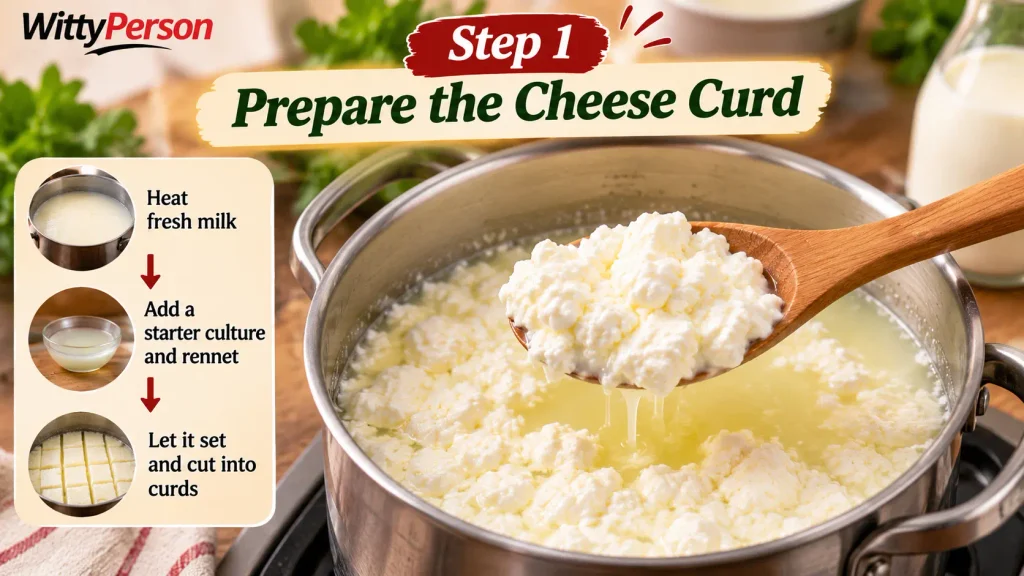
Step 1: Prepare the Cheese Curd
The process begins by heating fresh cow’s milk and adding a starter culture and rennet to help it form curds. Once the milk thickens, the curds are cut into small pieces and separated from the whey.
These soft curds become the base for the mozzarella shell.
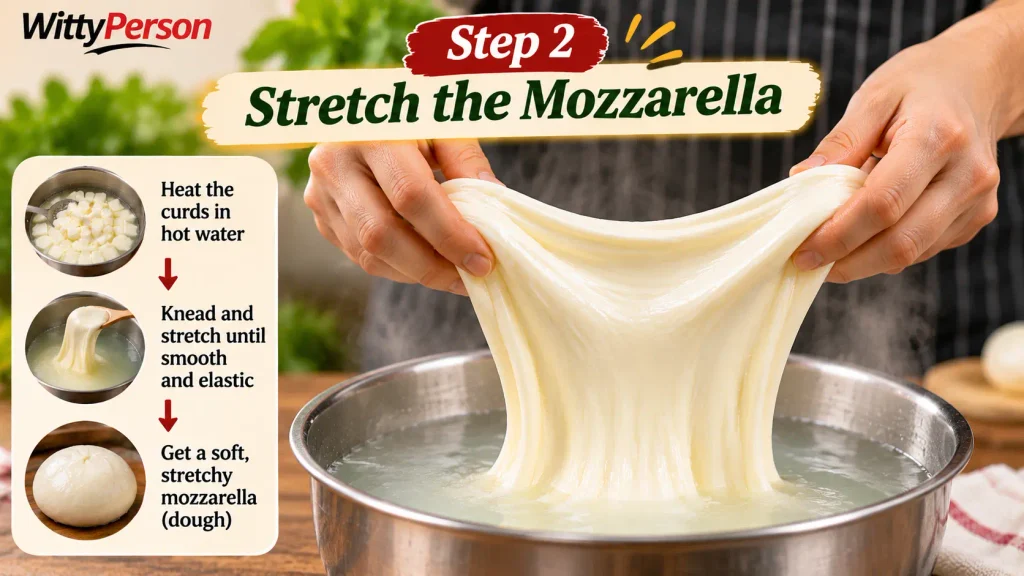
Step 2: Stretch the Mozzarella
The curds are heated in hot water or whey until they become soft and stretchy. They are then kneaded and stretched until the cheese develops a smooth, elastic texture.
This process is known as pasta filata, an Italian technique used to make stretched-curd cheeses such as mozzarella.
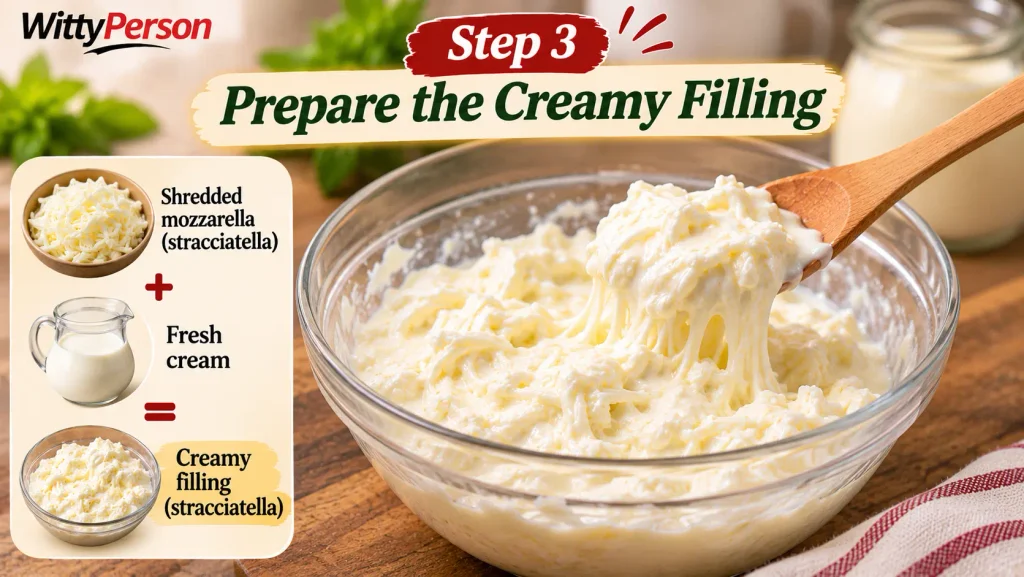
Step 3: Prepare the Creamy Filling
The creamy centre of burrata is made by mixing shredded mozzarella strands with fresh cream. This mixture is called stracciatella.
It gives burrata its rich, soft texture and the creamy filling that flows out when the cheese is cut open.
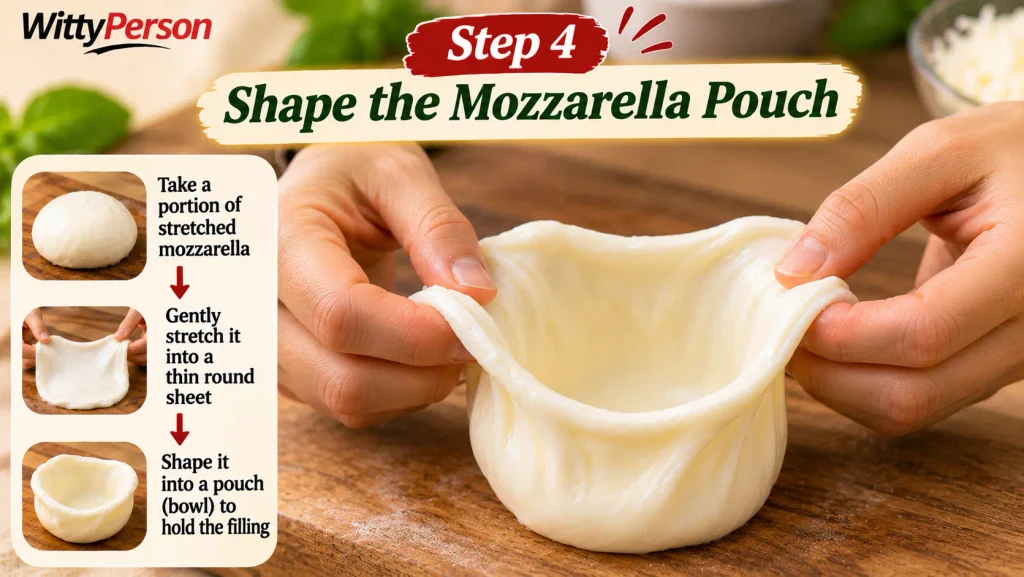
Step 4: Shape the Mozzarella Pouch
A portion of the stretched mozzarella is shaped into a thin, round pouch while it is still warm and flexible.
The edges are gently stretched to create enough space for the creamy stracciatella filling. The outer layer should remain thin but strong enough to hold the filling.
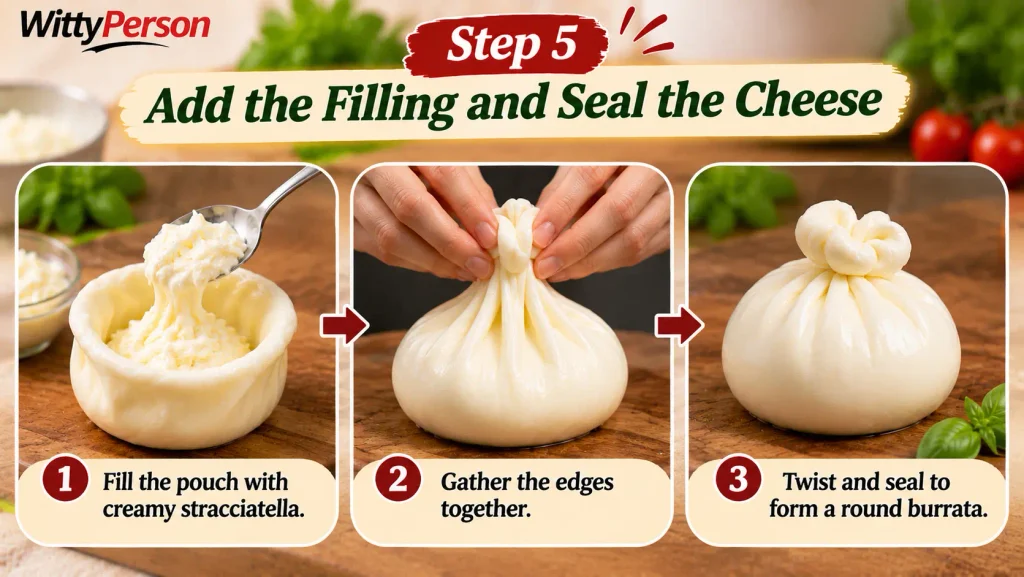
Step 5: Add the Filling and Seal the Cheese
The prepared stracciatella filling is carefully placed inside the mozzarella pouch. The open edges are then gathered together and sealed to form a small knot at the top.
This creates the familiar rounded shape of burrata, with a mozzarella exterior and a soft, creamy centre.
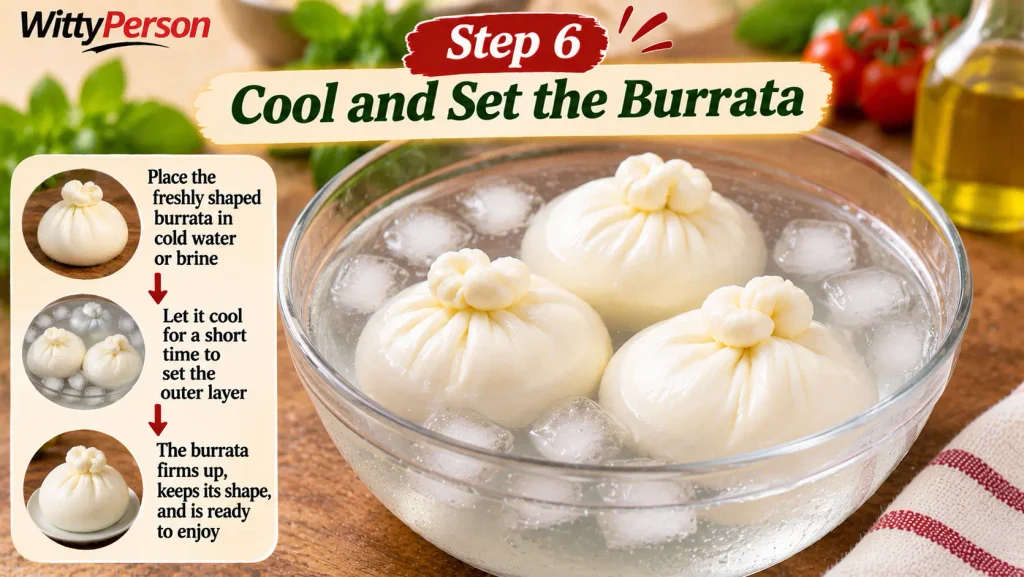
Step 6: Cool and Set the Burrata
The freshly shaped burrata is placed in cool water or brine to help the outer layer firm up and maintain its shape.
Once cooled, the cheese is ready to be packaged and stored under refrigeration. Fresh burrata is best enjoyed soon after production for its soft texture and delicate flavour.
Step 7: Serve Fresh Burrata
Burrata is best served fresh, either on its own or with simple ingredients that complement its creamy flavour.
How to Eat Burrata
For the simplest serving, let burrata sit out briefly so it loses some of its refrigerator chill. Place it on a plate, open it just before serving, and add olive oil, salt, and pepper. Serve with crusty bread so guests can scoop up the creamy center.
A few easy ways to enjoy it:
- With tomatoes and basil: Pair it with ripe tomatoes, basil leaves, olive oil, and a splash of balsamic vinegar.
- On toast: Spread the filling over grilled bread, then add roasted vegetables or a spoonful of pesto.
- In a salad: Set it over leafy greens, sliced peaches, tomatoes, or grilled vegetables.
- With pasta: Tear it over warm pasta just before serving so the cheese softens without disappearing into the sauce.
- On pizza: Add it after the pizza comes out of the oven for a creamy finish.
- On a snack board: Serve it with crackers, fruit, olives, cured meats, or roasted peppers.
Burrata also pairs well with ingredients that balance its richness. Try lemon, vinegar, fresh herbs, peppery greens, or crisp vegetables. You don’t need a complicated recipe: a few seasonal ingredients are often enough.
How to Choose and Store Burrata
Look for burrata in the refrigerated cheese section. Check the package date and keep the cheese cold until you’re ready to serve it. Since burrata is fresh, follow the storage instructions on its package and enjoy it soon after opening. Once cut, its filling is best eaten right away for the best texture.
If you’re pregnant or otherwise at increased risk from foodborne illness, check that the package says the cheese is made with pasteurized milk. The FDA advises choosing soft cheeses made with pasteurized milk during pregnancy. FDA food safety guidance.
Is Burrata Healthy?
Whether burrata fits your diet depends on your preferences, portion size, and overall eating habits. It provides protein and nutrients found in dairy, but its cream-filled center also makes it a rich food. Nutrition varies by brand and serving size, so check the package’s Nutrition Facts if you’re watching calories, saturated fat, sodium, or protein.
You can enjoy burrata as part of a meal rather than treating it as the whole meal. A smaller portion with vegetables, fruit, or whole-grain bread adds creaminess and flavor alongside other foods. If you’re comparing burrata with mozzarella, use the labels for the specific products you’re buying: the serving sizes and nutrition can differ.
Burrata FAQs
What is the difference between mozzarella and burrata?
Fresh mozzarella is a solid cheese with a soft, springy texture. Burrata has a mozzarella shell filled with cream and cheese curds, so it’s creamier inside. Use mozzarella for slices or melting; choose burrata when you want a soft, rich center.
Do you eat the skin of burrata?
Yes. The outside is a thin layer of mozzarella, not a rind or wrapper. It’s edible, and its mild flavor works with the creamy filling.
Is burrata healthier than mozzarella?
There isn’t one answer that applies to every brand or serving. Burrata contains a cream filling, so it can be richer than plain fresh mozzarella. Compare the Nutrition Facts labels for calories, saturated fat, sodium, and protein, and choose a portion that suits your needs.
Is burrata expensive?
Burrata often costs more than basic fresh mozzarella because it takes extra steps to shape and fill. Prices vary by brand, package size, and where it was made. Look for it in the specialty cheese section, and consider how many people will share a ball before choosing a size.
The Takeaway
Burrata brings together two textures in one fresh cheese: a delicate mozzarella shell and a creamy center of curds and cream. Serve it simply with good bread and ripe produce, or add it to salads, pasta, and pizza. If you’ve never tried it, opening a ball at the table is an easy way to see what makes burrata special.
Author

piyushsaini31@gmail.com
Related Posts

How to make iced tea at home (classic, sweet, and cold brew)
- 0
- 1,597 word
Americans drink a lot of iced tea. In 2024 they went through about 86 billion servings of tea, or roughly 4 billion...
Read out all
How to Make Tea: An Easy Guide for a Better Cup
- 0
- 1,766 word
A good cup of tea doesn’t require special equipment or a complicated routine. Start with fresh water, use the right amount of...
Read out all
Malai Kofta Recipe
- 0
- 1,398 word
Restaurant-Style Curry with Creamy Gravy A plate of soft, melt-in-the-mouth koftas covered in rich, creamy gravy is hard to resist. Malai Kofta...
Read out all