
- 0
- 1,872 word
If you’ve ordered a chai latte at a coffee shop or seen chai on a tea menu, you may have wondered how it differs from regular tea. It has a spicy aroma, a creamy texture, and a following among tea drinkers all over the world.
Chai is the Hindi word for tea. In India it usually means black tea made with water, milk, and sugar. Add spices such as ginger, cardamom, cinnamon, and cloves and you have masala chai.
Indian chai is usually simmered with its ingredients instead of steeped, which makes it richer than a regular cup of black tea. People drink it at breakfast, on an afternoon break, or while talking with friends.
This guide covers what chai is made of, how it tastes, its nutrition, and how to make authentic Indian chai at home with simple ingredients.
What is chai?
Chai is a traditional Indian-style tea made by brewing black tea with water, milk, and often sugar. Depending on taste and region, it may also include spices such as ginger, cardamom, cinnamon, cloves, and black pepper.
The word comes from the Hindi word for tea, which traces back to the Chinese word “cha.” That makes “chai tea” technically repetitive, since it translates to “tea tea.”
In India, chai is part of everyday life. Families make it in the morning, friends share it over conversation, and roadside tea vendors serve fresh cups all day.
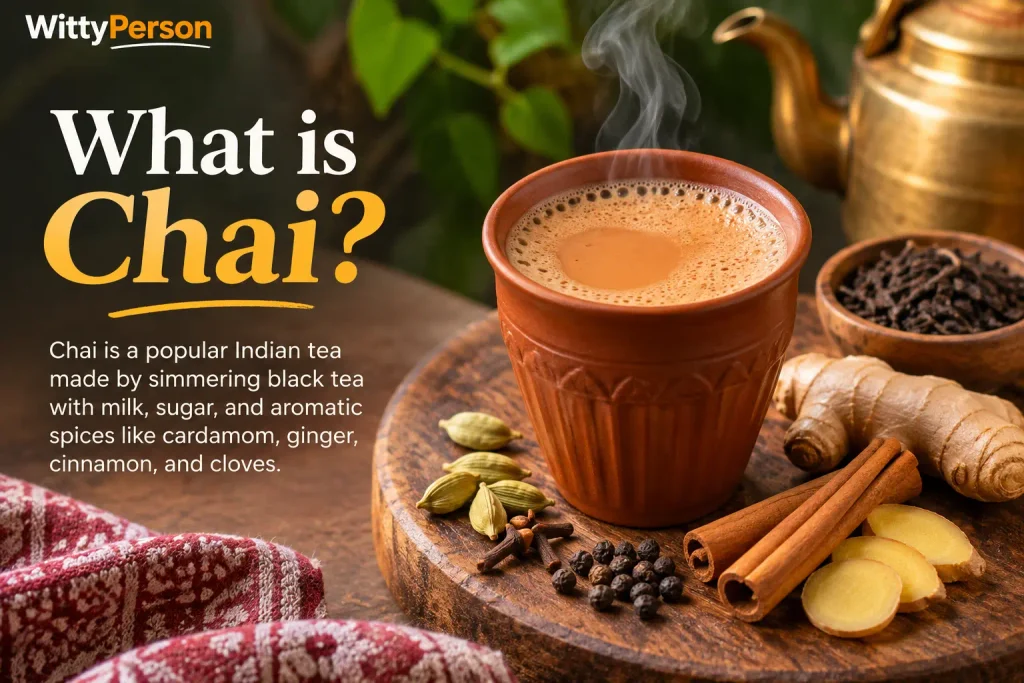
A traditional cup of Indian chai has a bold, slightly malty flavor from the black tea. Milk softens the bitterness and makes the drink creamy and smooth, and spices like ginger and cardamom add aroma and warmth.
Not every chai recipe contains spices. Plain milk tea is also commonly called chai in India, while the spiced version is more specifically known as masala chai.
What is chai tea made of?
Traditional Indian chai uses a few everyday ingredients, and most are easy to find at American grocery stores.
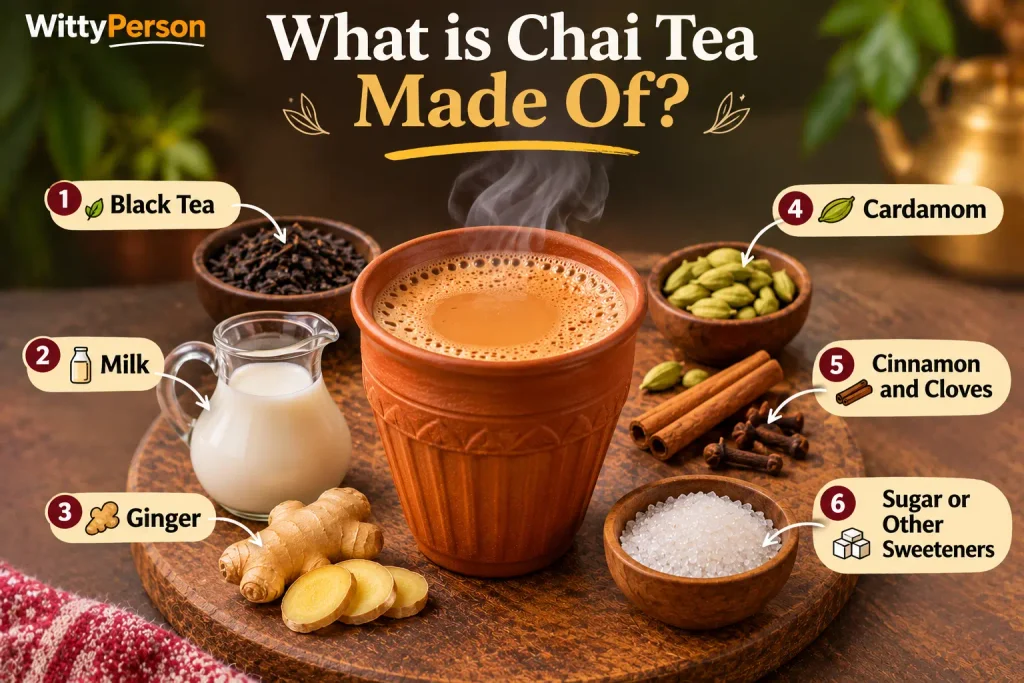
1. Black tea
Black tea is the base of Indian chai. Assam is a popular choice because its strong, malty flavor holds up against milk and spices.
Loose-leaf tea and tea bags both work, but for a stronger, more traditional cup, try Assam CTC tea, which brews quickly and gives a deep color.
2. Milk
Milk gives chai its creamy texture and balances the strong taste of black tea. Whole milk is common in Indian households, but you can also use:
- 2% milk for a lighter cup.
- Skim milk for less fat.
- Oat milk for a plant-based alternative.
- Almond milk for a mild nutty flavor.
- Soy milk for a dairy-free option with more protein.
3. Ginger
Fresh ginger adds a warm, slightly peppery bite, and it’s especially popular in colder months. Crush or grate a small piece before adding it to the boiling water.
4. Cardamom
Green cardamom is one of the most recognizable spices in Indian chai, with a sweet, floral aroma. Crush the pods before brewing to release it.
5. Cinnamon and cloves
Cinnamon adds mild sweetness and a woody aroma, while cloves bring a stronger, slightly sharp flavor. A small amount of each is enough.
6. Sugar or other sweeteners
Sugar balances the bitterness of the tea and the intensity of the spices. Honey, maple syrup, and jaggery also work, so sweeten to taste.
What does chai taste like?
Chai combines the boldness of black tea, the creaminess of milk, and the aroma of spices. The exact taste depends on the ingredients and how you brew it.
A traditional masala chai is smooth and slightly sweet from the milk and sugar. Ginger, cinnamon, and cloves add warmth, cardamom adds a fragrant, faintly sweet aroma, and the black tea gives the cup a deep, full body. The milk softens both the spices and the tea’s bitterness.
If you enjoy flavored coffee, spiced hot chocolate, or cinnamon-based drinks, you may like chai too. It isn’t always sweet, though. You can cut back on the sugar or skip it to taste more of the tea and spices.
How is Indian chai different from regular tea?
Chai and regular tea share the same basic ingredient, but they’re prepared differently. Regular black tea is usually made by steeping leaves or a tea bag in hot water, and it’s served plain or with milk and sugar added afterward. Indian chai is usually made by simmering tea, water, milk, and sometimes spices together.
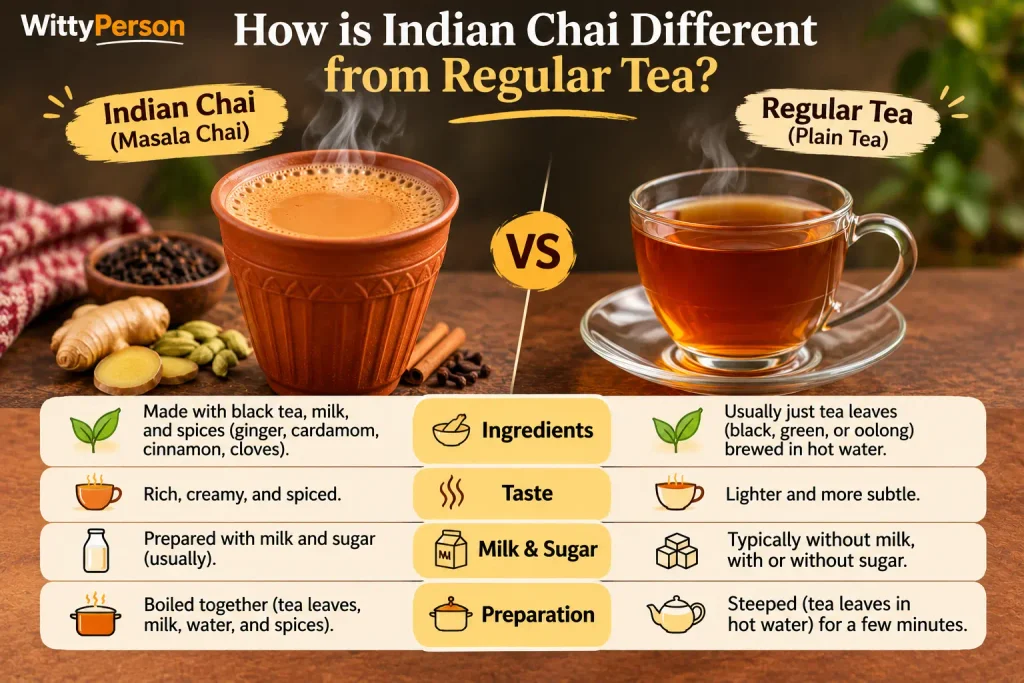
| Feature | Indian chai | Regular black tea |
|---|---|---|
| Tea base | Usually black tea | Black tea |
| Preparation | Simmered with ingredients | Usually steeped in hot water |
| Milk | Commonly included | Optional |
| Spices | Often included | Usually not included |
| Flavor | Rich, creamy, and aromatic | Bold and slightly bitter |
| Sweetener | Commonly added | Optional |
How to make Indian chai at home
You don’t need special equipment or expensive ingredients to make Indian chai at home. A small saucepan, a strainer, and a few pantry staples are enough. This easy chai recipe makes two servings and takes about 10 minutes.
Ingredients for homemade Indian chai
| Ingredient | Quantity |
|---|---|
| Water | 1 cup |
| Whole milk | 1 cup |
| Black tea leaves | 2 teaspoons |
| Fresh ginger | 1-inch piece |
| Green cardamom | 2 pods |
| Cinnamon | 1 small stick |
| Cloves | 2 |
| Sugar | 2 teaspoons |
- Preparation time: 3 minutes
- Cooking time: 7 minutes
- Total time: 10 minutes
- Servings: 2 cups
Step-by-step instructions: how to make Indian chai
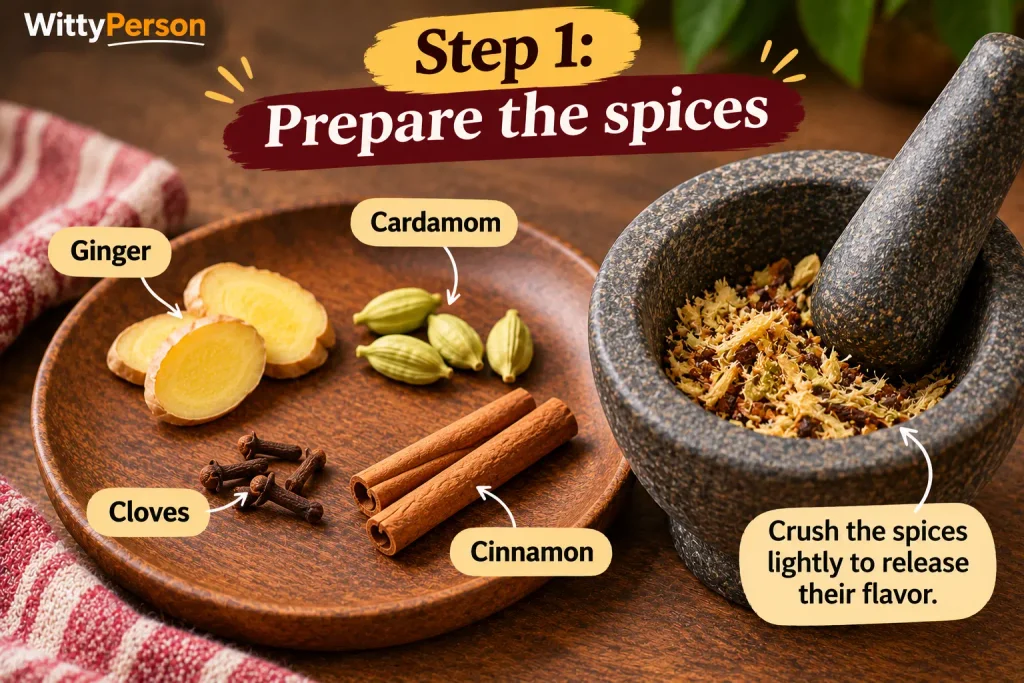
Step 1: Prepare the spices
Peel and crush the fresh ginger, and lightly crush the cardamom pods. Crushed spices release more flavor during brewing than whole ones. Keep the cinnamon stick and cloves nearby.
Step 2: Boil the water
Pour one cup of water into a small saucepan and set it over medium heat. Add the crushed ginger and cardamom along with the cinnamon and cloves, and let the mixture boil for 2 to 3 minutes so the water takes on the flavor of the spices.

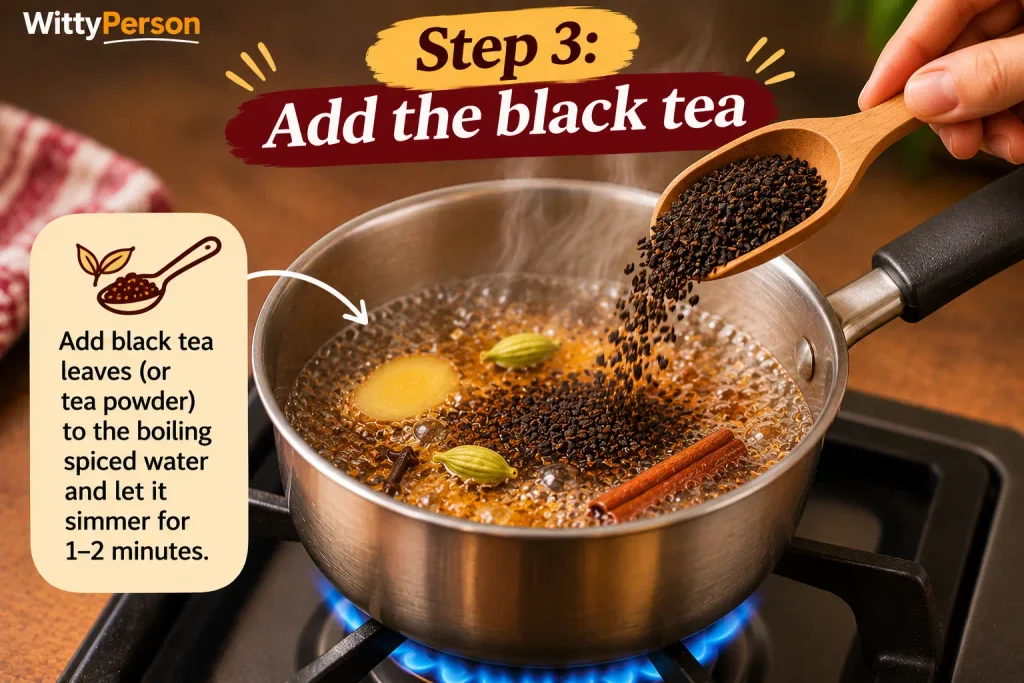
Step 3: Add the black tea
Add two teaspoons of black tea leaves to the boiling spice water and simmer for 1 to 2 minutes, longer if you like your chai strong. The water will turn a deep brown.
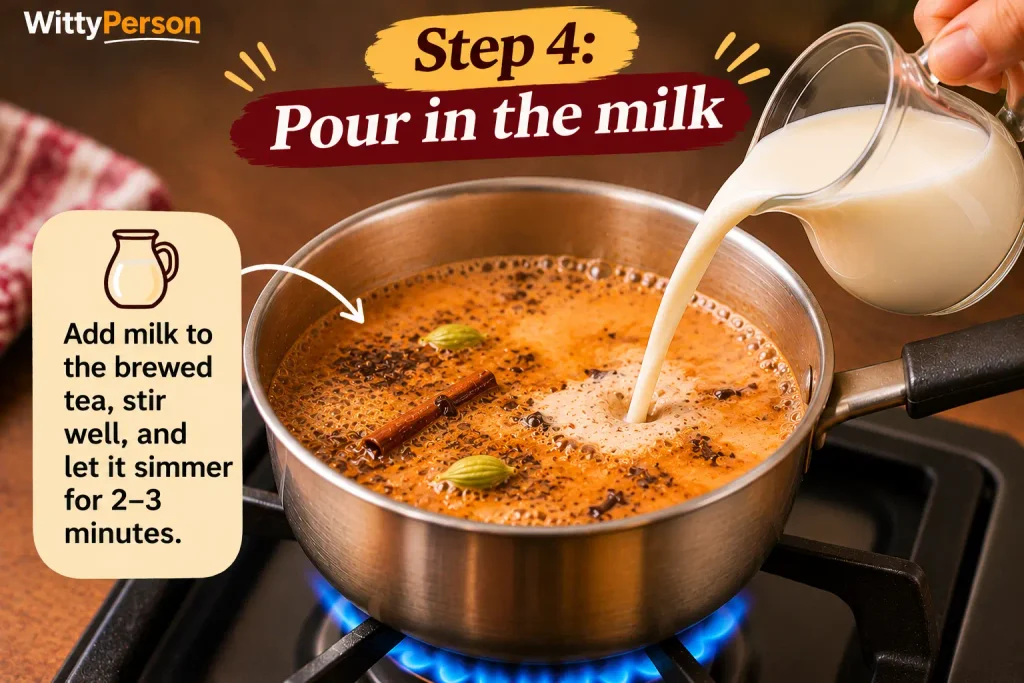
Step 4: Pour in the milk
Add one cup of whole milk and stir gently. Bring the mixture to a gentle boil, and watch the pan because milk rises quickly when it heats. Then reduce the heat and simmer for another 2 to 3 minutes.
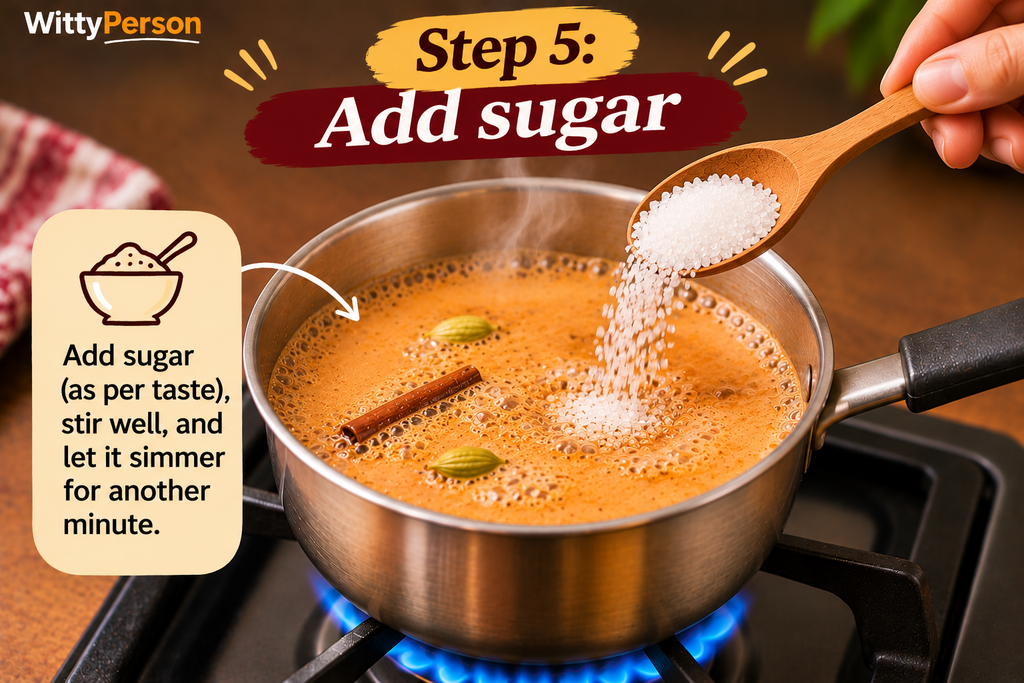
Step 5: Add sugar
Stir in two teaspoons of sugar until it dissolves. Use more or less to taste, or leave it out for a less sweet cup.
Step 6: Strain and serve
Turn off the heat and pour the chai through a fine-mesh strainer into two cups. The strainer catches the tea leaves and whole spices, so the drink comes out smooth. Serve it hot, with cookies, toast, biscuits, or any snack you like.

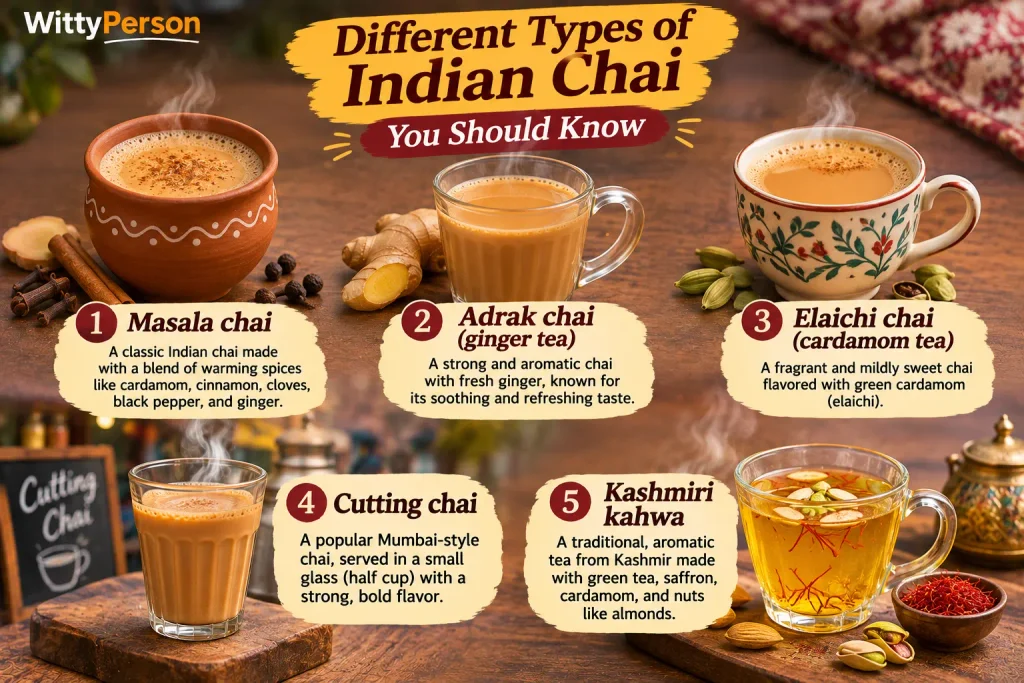
Different types of Indian chai you should know
Chai varies a lot across India, and the ingredients, method, and flavor can change from one household or region to the next. These are some popular types.
1. Masala chai
Masala chai is made with black tea, milk, sugar, and a mix of spices, commonly ginger, cardamom, cinnamon, and cloves. It has a bold flavor and a fragrant aroma.
2. Adrak chai (ginger tea)
Adrak chai is Indian tea made with fresh crushed ginger. It tastes stronger and slightly spicy, and it’s especially good in cold or rainy weather.
3. Elaichi chai (cardamom tea)
Elaichi chai gets its aroma from green cardamom pods and has a mild, sweet spice flavor.
4. Cutting chai
Cutting chai is served at Mumbai’s busy street tea stalls in a small glass. It’s usually a strong, sweet preparation of Indian tea, and the small portion suits a quick break.
5. Kashmiri kahwa
Kahwa is a traditional Kashmiri drink made with green tea, saffron, cardamom, and other aromatics, and almonds are often added. Unlike milk-based chai, it is generally served without milk.
Is chai tea healthy?
Chai can fit into a balanced diet. How healthy a cup is depends on the milk you use and how much sugar you add.
Black tea naturally contains plant compounds called polyphenols, and ginger, cinnamon, and cardamom contain naturally occurring compounds too. Milk adds protein, calcium, and other nutrients, so milk chai is more substantial than plain brewed tea. Too much sugar raises the calorie and added-sugar content.
To make homemade chai lighter:
- Use less sugar.
- Choose low-fat milk to cut fat and calories.
- Use fresh spices instead of heavily sweetened chai syrups.
- Keep servings moderate.
- Skip it late in the evening if caffeine affects your sleep.
Chai is not a medicine or a treatment for any health condition, and its benefits depend on the ingredients and your overall diet.
Chai nutrition facts: calories and nutritional value
Nutrition varies with the milk, sweetener, and recipe. One serving (about 1 cup) of the homemade recipe above has these estimated values:
| Nutrient | Approximate amount |
|---|---|
| Calories | 90 kcal |
| Protein | 4 g |
| Total carbohydrates | 10 g |
| Total fat | 4 g |
| Saturated fat | 2 g |
| Total sugars | 10 g |
| Dietary fiber | 0 g |
| Calcium | 138 mg |
Note: These are approximate values calculated using whole milk and one teaspoon of added sugar per serving. Actual values vary with the ingredients, tea quantity, and preparation method. The sugar figure includes naturally occurring milk sugar.
To lower the calories, use 2% milk and less sugar. Plant-based milk also works, though its nutrition depends on the brand and whether it’s fortified.
What is the difference between chai and a chai latte?
Chai and chai lattes are related drinks. Traditional Indian chai is made by simmering tea with water, milk, sugar, and sometimes spices. A chai latte is a café-style drink, usually made with chai concentrate or brewed spiced tea and steamed milk, sometimes topped with milk foam. Lattes tend to be sweeter and creamier, especially when made with flavored syrups.
For a traditional Indian cup, start with homemade masala chai.
Frequently asked questions about chai
1. What exactly is chai?
Chai is the Hindi word for tea. In India, it commonly refers to black tea prepared with water, milk, and sugar. When spices such as ginger, cardamom, cinnamon, and cloves are added, it is called masala chai. People drink it every day at home, in offices, and at tea stalls across India.
2. Is chai tea healthier than coffee?
Neither is automatically healthier. Both contain caffeine and naturally occurring plant compounds. Chai made with milk provides protein and calcium, while plain black coffee generally has fewer calories. The difference depends on serving size, milk, sugar, and other additions, and using less sugar lightens either drink.
3. What is chai flavor like?
Chai tastes creamy and aromatic, with a bold black tea base. Milk adds smoothness, and spices such as ginger, cardamom, cinnamon, and cloves add warmth, sweetness, and a slightly peppery edge. Depending on the recipe, it can range from mildly spiced to strong and intense.
4. How is chai different from tea?
Tea is a broad category of drinks made from tea leaves. Chai is the Hindi word for tea, but in India it usually means a milk-based preparation. Traditional chai is simmered with milk and sugar, while regular tea is often steeped in hot water and served without milk or spices.
Final thoughts
Chai combines the bold flavor of black tea, the richness of milk, and the warmth of spices. Whether you like a plain cup of milk tea or a strongly spiced masala chai, you can adjust it to your taste.
You don’t need a café for it. A few everyday ingredients and about 10 minutes are enough to make authentic Indian chai in your kitchen. Try the recipe and adjust the spices and sweetness until it suits you.
Author

piyushsaini31@gmail.com
Related Posts
What Is Paneer? A Complete Guide to Indian Cheese, Nutrition & Homemade Paneer Recipe
- 0
- 1,877 word
What Is Paneer? Paneer is a fresh, mild cheese used throughout Indian cooking. You can grill it, pan-fry it, or simmer it...

Easy Pancake Recipe: Fluffy Homemade Pancakes From Scratch
- 0
- 1,510 word
This easy pancake recipe makes soft, fluffy homemade pancakes with golden edges from ingredients most kitchens already have. The batter takes about...

Chicken Vindaloo Recipe: Easy, Tangy & Spicy
- 0
- 1,290 word
Chicken vindaloo pairs tender chicken with garlic, warm spices and a sharp vinegar tang. This version uses familiar US ingredients, and you...

What is espresso? Everything you need to know about espresso coffee
- 0
- 1,702 word
Almost every coffee shop in the United States has espresso on the menu. Cappuccinos, lattes, iced Americanos, and caramel macchiatos all start...

What Is Burrata? A Guide to Italy’s Creamy Cheese
- 0
- 1,728 word
If you’ve seen a soft white cheese served beside ripe tomatoes or spread over warm bread, you may have wondered: what is...

How to make iced tea at home (classic, sweet, and cold brew)
- 0
- 1,727 word
Americans drink a lot of iced tea. In 2024 they went through about 86 billion servings of tea, or roughly 4 billion...
Read out all