
- 0
- 1,877 word
What Is Paneer?
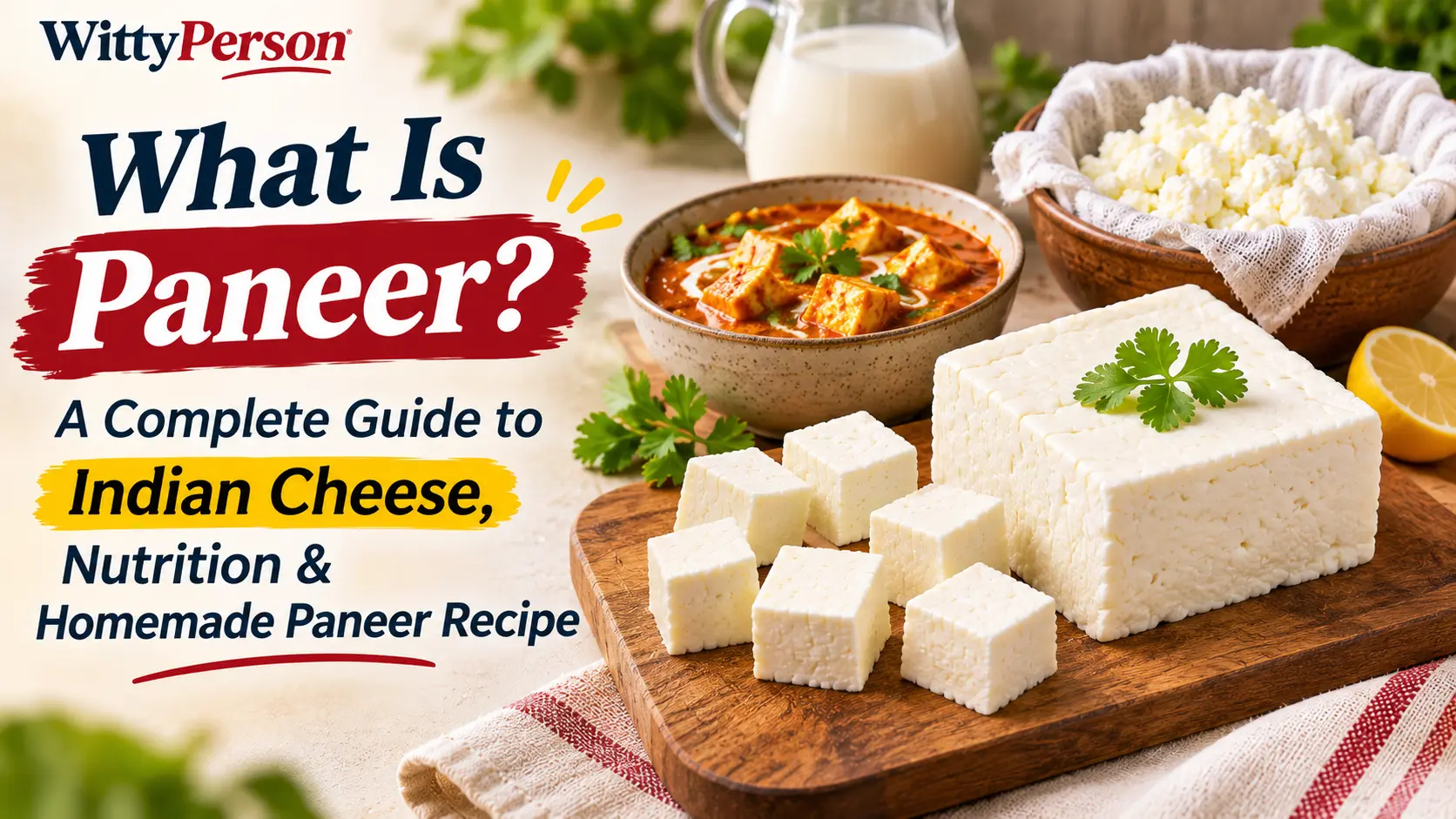
Paneer is a fresh, mild cheese used throughout Indian cooking. You can grill it, pan-fry it, or simmer it in curries and other vegetarian dishes.
It’s a traditional Indian cheese made by curdling heated milk with an acid such as lemon juice or vinegar. The solid milk curds are separated from the liquid whey, drained through a cheesecloth, and pressed into a firm block.
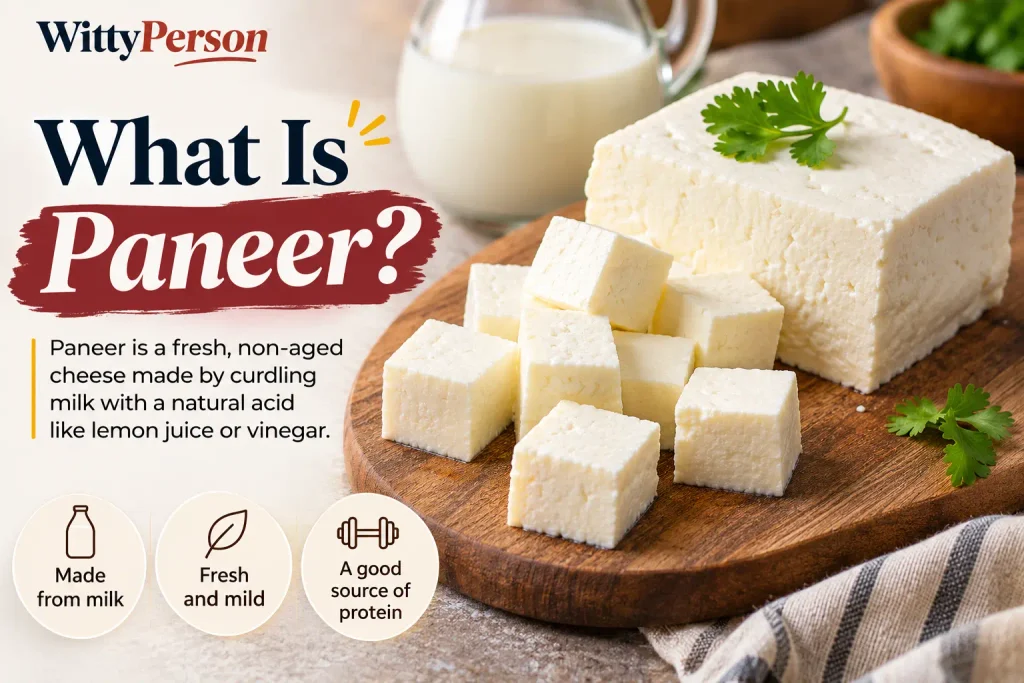
Unlike mozzarella or cheddar, paneer doesn’t melt when heated. It holds its shape, so it works in curries, on grilled skewers, and in quick weeknight dinners.
You may also see it called Indian cottage cheese or paneer cheese in American grocery stores and recipes. Paneer has a different texture and preparation method from the cottage cheese commonly sold in the United States.
What is paneer made of?
Paneer is traditionally made from just two ingredients, milk and an acid. The milk provides the protein, fat, and calcium, and the acid separates it into solid curds and liquid whey.
- Whole milk: Full-fat cow’s milk is a popular choice because it produces creamy, soft paneer with a good yield.
- Lemon juice: Fresh lemon juice helps curdle the heated milk and separate the curds from the whey.
- White vinegar: An alternative to lemon juice that works well for separating milk solids.
- Water: A little water can be used to dilute the lemon juice or rinse the finished curds.
Some recipes use yogurt or citric acid instead of lemon juice, but milk and lemon juice are enough for a simple batch at home.
Paneer needs no animal rennet, starter culture, or aging, which is why it’s described as a fresh, acid-set cheese.
What does paneer taste like?
Paneer has a mild, creamy, milky flavor with a very subtle sweetness. It’s not as salty or sharp as cheddar, and it lacks the tang of some aged cheeses.
Its texture is soft yet firm, with a slightly springy feel when you bite into it. Fresh homemade paneer is usually creamier than some packaged varieties.
Paneer absorbs the flavors of whatever it’s cooked in. In a spicy tomato-based curry, for example, it takes on the sauce’s flavor without losing its shape.
If you’re trying paneer for the first time, its mild flavor is comparable to fresh mozzarella, though the texture and cooking properties differ.
Why doesn’t paneer melt?
Unlike many popular cheeses, paneer holds its shape when exposed to heat. That’s because it’s made by acid-curdling milk rather than with the rennet-based process used for many melting cheeses.
The acid changes the structure of the milk proteins, allowing the curds to form a firm block. When heated, paneer softens and may develop golden-brown edges, but it doesn’t turn into a stretchy or runny liquid. That makes it suited to grilling, frying, and cooking in sauces.
Is paneer the same as cottage cheese or tofu?
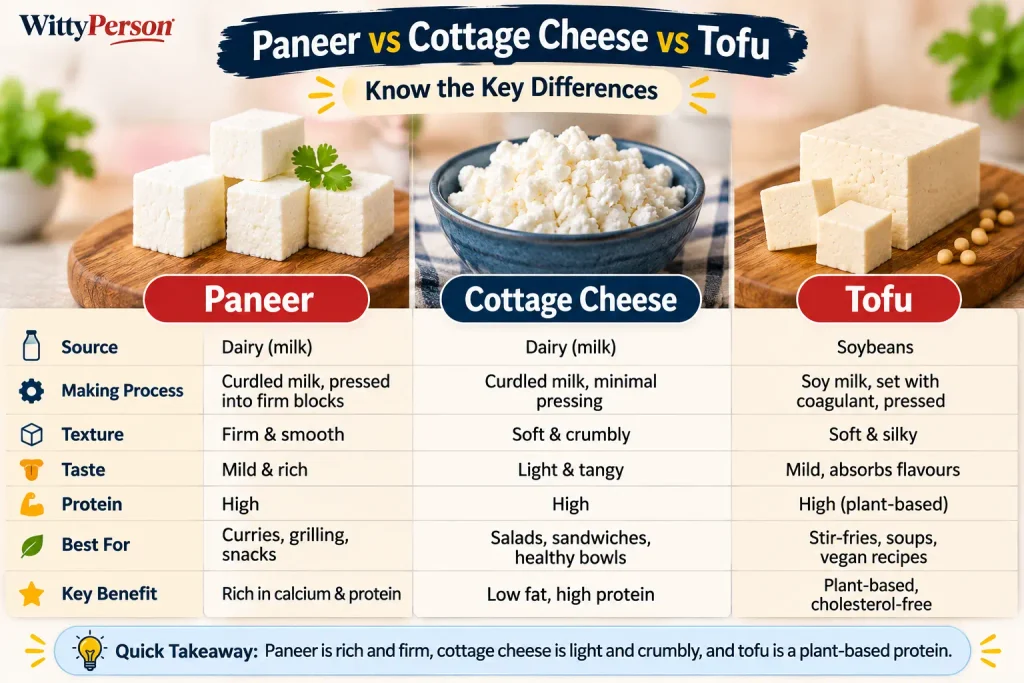
No. Paneer is sometimes called Indian cottage cheese, but it differs from both American cottage cheese and tofu.
| Feature | Paneer | Cottage Cheese | Tofu |
|---|---|---|---|
| Main ingredient | Dairy milk | Dairy milk | Soybeans |
| Texture | Firm and soft | Loose and creamy | Soft to extra firm |
| Taste | Mild and milky | Mild and slightly tangy | Mild |
| Melts when heated | No | No | No |
| Suitable for vegans | No | No | Yes |
Paneer and cottage cheese both come from dairy milk, but cottage cheese is sold as loose curds, often mixed with cream or liquid. Paneer is drained and pressed into a solid block. Tofu is made from soy milk and is a plant-based alternative.
How to make paneer at home (fresh Indian cheese)
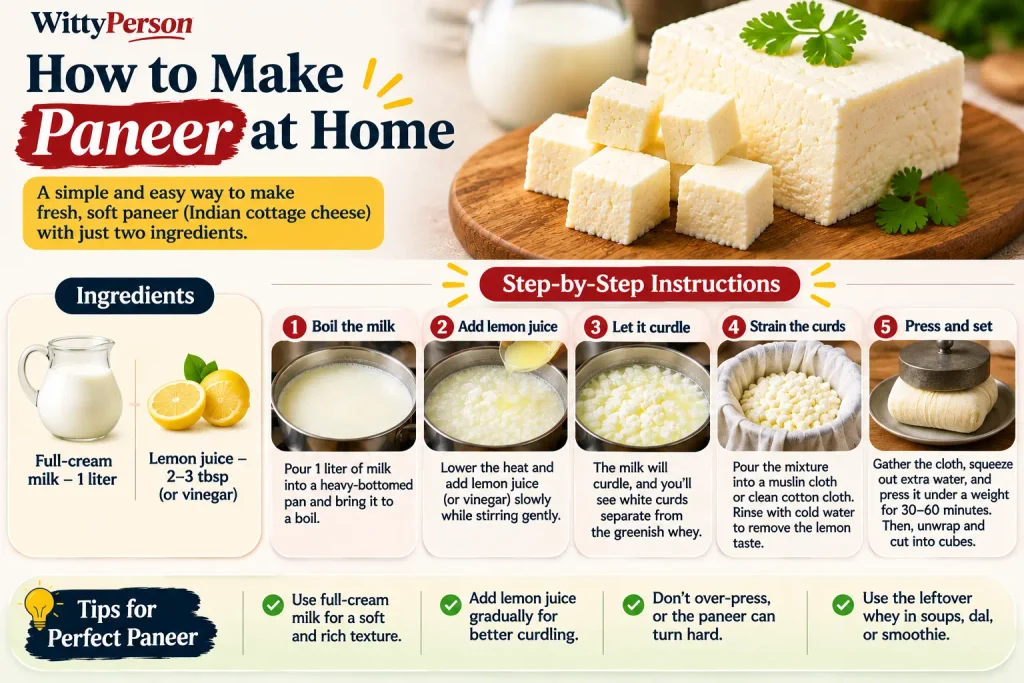
Homemade paneer needs only whole milk, lemon juice, a saucepan, and cheesecloth, with no special cheese-making equipment. Fresh paneer works in curries, wraps, salads, and grilled dishes.
Homemade paneer recipe details
| Recipe Information | Details |
|---|---|
| Preparation time | 10 minutes |
| Cooking time | 15–20 minutes |
| Setting time | 2–4 hours |
| Total time | Approximately 3 hours |
| Difficulty | Easy |
| Main ingredient | Whole milk |
| Yield | Approximately 200–250 g |
| Cuisine | Indian |
Ingredients for homemade paneer
- 8 cups (2 quarts) whole milk
- 3–4 tablespoons fresh lemon juice
- Cold water for rinsing
- Cheesecloth or clean muslin cloth
Equipment:
- Large, heavy-bottomed saucepan
- Wooden spoon or spatula
- Large mixing bowl
- Fine-mesh strainer or colander
- Cheesecloth
- Heavy plate or a few food cans for pressing
How to make paneer step by step
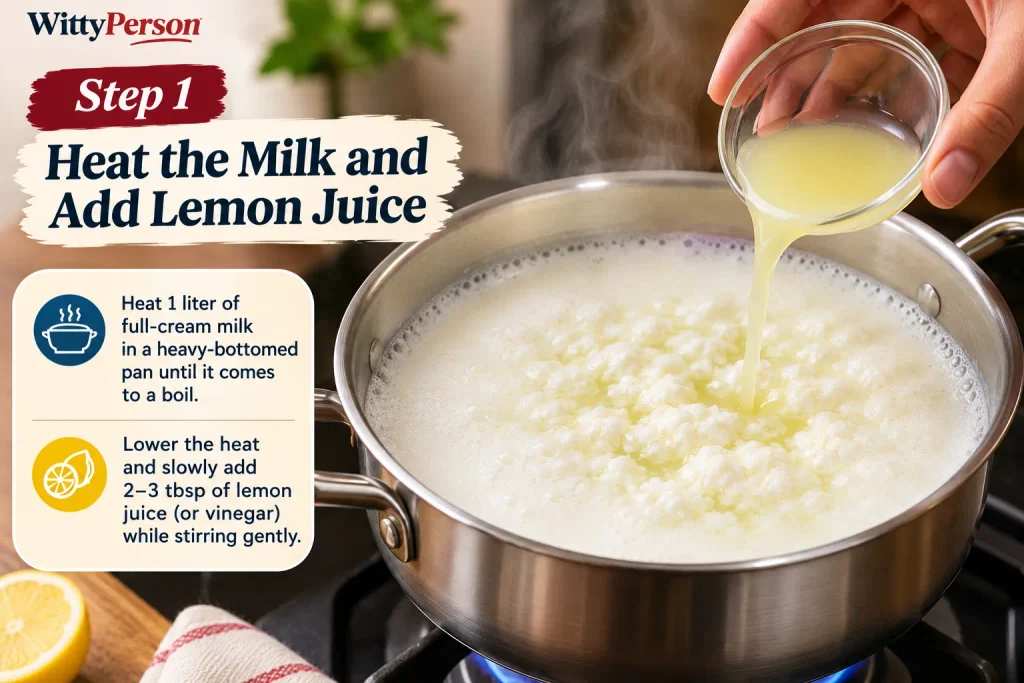
Step 1: Heat the milk and add lemon juice
Pour the whole milk into a large saucepan and place it over medium heat. Stir occasionally so the milk doesn’t stick to the bottom.
Heat until the milk becomes foamy and is just about to boil. Turn off the heat and slowly add the lemon juice, stirring gently for about one minute.
What to look for: The milk should start separating into small white solids and a pale yellowish-green liquid.
Step 2: Let the milk curdle
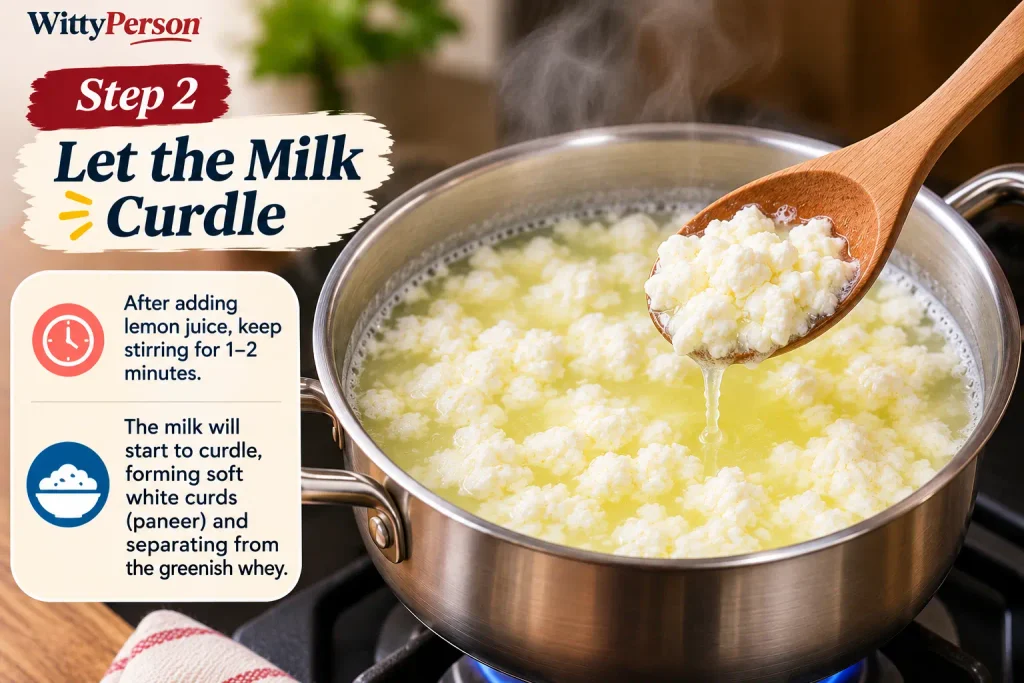
Let the milk sit for a minute or two. Small white pieces will form and separate from the liquid. These are the curds, and the liquid is the whey.
If the milk doesn’t separate completely, add another teaspoon of lemon juice and stir gently. Don’t add too much, because excess lemon juice can leave a sour taste.
What to look for: The liquid should become noticeably clearer, with the white curds separated from it.
Step 3: Strain the curds
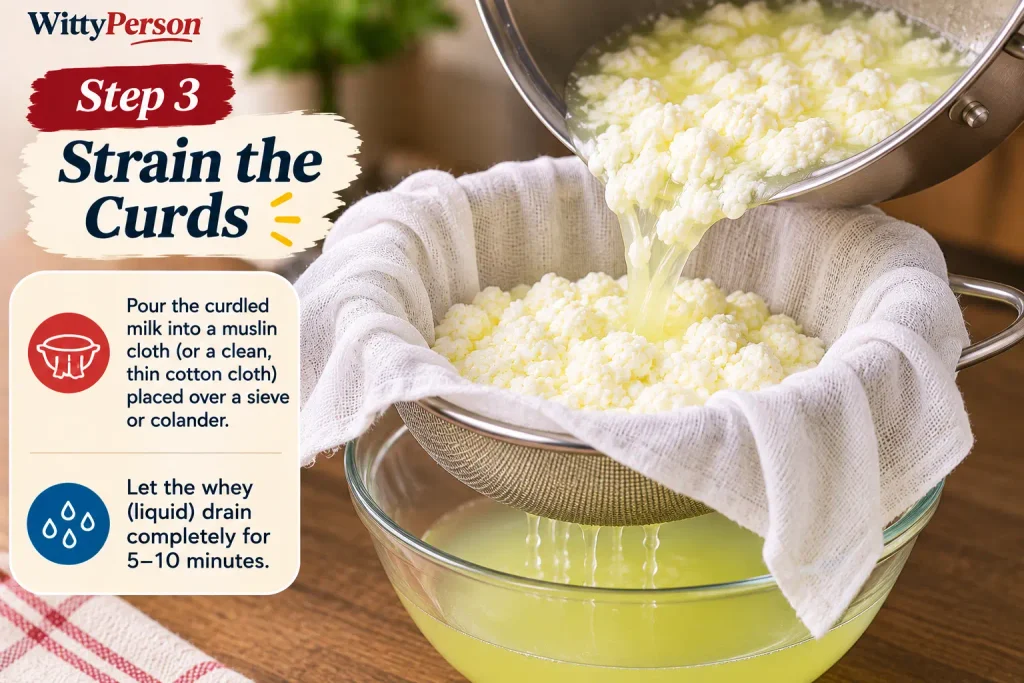
Place a fine-mesh strainer over a large bowl and line it with two layers of cheesecloth. Carefully pour the curdled milk into the lined strainer. The whey drains through the cloth while the curds stay inside. Let it drain for approximately 5–10 minutes.
What to look for: The white curds should collect inside the cheesecloth while the yellowish liquid drains into the bowl.
Step 4: Rinse and remove excess liquid
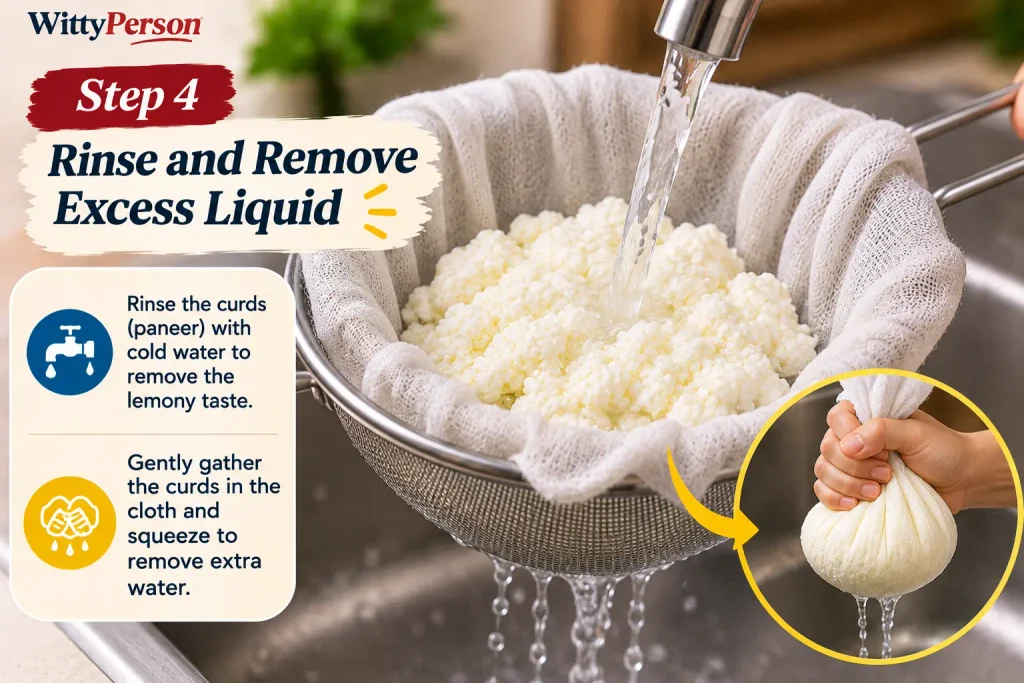
Gather the corners of the cheesecloth and bring them together to form a small bundle.
Briefly rinse the curds under cold running water. This cools them and removes some of the leftover lemon flavor.
Gently squeeze the cloth to remove excess water. Don’t squeeze too hard, because the curds can escape through the cloth.
What to look for: The curds should form a soft, moist mass without dripping excess liquid.
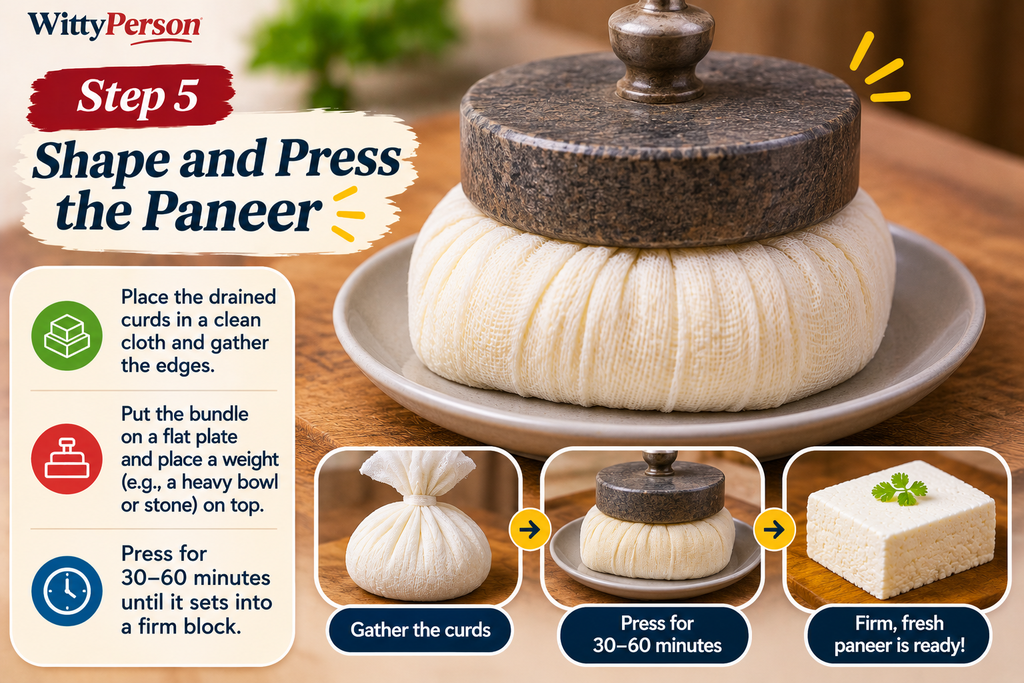
Step 5: Shape and press the paneer
Place the wrapped curds on a flat plate or inside a shallow container and shape them into a compact block. Put another plate on top and add a few heavy food cans or another suitable weight.
Press for approximately 2–4 hours in the refrigerator. This removes the remaining whey and gives the paneer its firm shape.
What to look for: The curds should hold together as a solid block that can be sliced or cut into cubes.
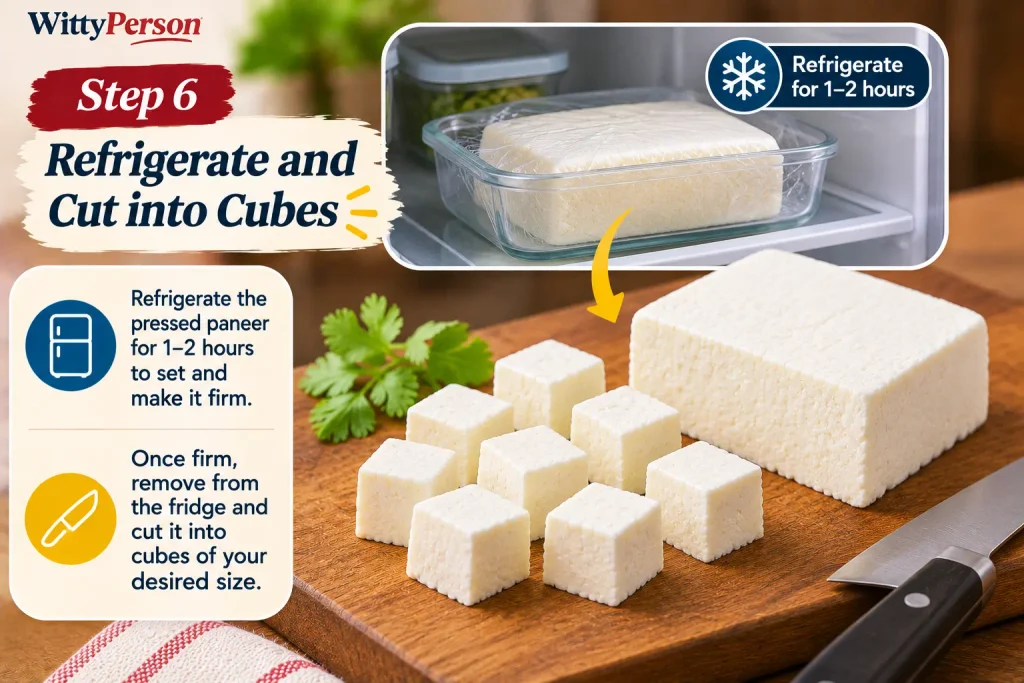
Step 6: Refrigerate and cut into cubes
Remove the weight and carefully unwrap the paneer from the cheesecloth. The paneer is ready. Cut it into cubes, slices, or rectangles depending on the recipe you’re preparing.
Use it immediately or refrigerate it in an airtight container.
What to look for: Fresh paneer should have a soft but firm texture and hold its shape when cut.
What are the best tips for making soft paneer?
- Choose whole milk. It makes richer, creamier paneer with a better yield than low-fat or skim milk, which can give less paneer and a drier texture.
- Avoid too much lemon juice. Add it gradually until the milk separates, since too much acid can affect the flavor.
- Don’t overheat the curds. Once the milk has separated, turn off the heat to help prevent a dry or grainy texture.
- Rinse the curds. A quick rinse with cold water removes the remaining lemon flavor.
- Adjust the pressing time. A shorter pressing time produces softer paneer, while a longer one makes it firmer.
- Use clean cheesecloth. A fine, clean cloth keeps the curds in while the whey drains.
Paneer nutrition: calories, protein, and other nutrients
Paneer is a dairy-based food that provides protein, fat, and calcium. It can be a useful addition to vegetarian meals, particularly when you want a source of dairy protein. Its nutritional content depends on the type of milk used, the amount of moisture removed, and the preparation method.
Approximate paneer nutrition per 100 grams
| Nutrient | Approximate Amount |
|---|---|
| Calories | 265 kcal |
| Protein | 18 g |
| Total fat | 20 g |
| Saturated fat | 12 g |
| Carbohydrates | 3 g |
| Calcium | 480 mg |
| Cholesterol | 55 mg |
| Sodium | 25 mg |
Note: These are illustrative estimates for full-fat paneer, not laboratory-tested values for this particular recipe. Actual values can vary considerably depending on the milk and preparation method. Use the nutrition label on packaged paneer for more precise information.
What are the potential benefits of eating paneer?
- Paneer contains dairy protein, which supplies the amino acids needed for muscle maintenance and other normal body functions.
- It provides calcium, a mineral needed for healthy bones and teeth.
- Its mix of protein and fat can make meals more filling, and pairing it with vegetables and whole grains makes a balanced meal.
- It suits lacto-vegetarians, who eat dairy but avoid meat and fish.
Is paneer healthy? It can be part of a balanced diet, but portion size and preparation matter. Deep-fried paneer or rich cream-based curries can contain considerably more calories than plain paneer.
Popular Indian cheese paneer recipes to try
Paneer’s mild taste works with spices, vegetables, herbs, and a range of sauces.
- Palak Paneer: Soft paneer cubes cooked in a creamy spinach-based sauce with Indian spices.
- Paneer Butter Masala: Paneer simmered in a rich tomato, butter, and cream sauce.
- Paneer Tikka: Marinated paneer cubes grilled or roasted until lightly charred.
- Kadai Paneer: Paneer cooked with bell peppers, tomatoes, and freshly ground spices.
- Shahi Paneer: A rich, mildly spiced curry traditionally prepared with a creamy nut-based sauce.
- Paneer Bhurji: Crumbled paneer cooked with onions, tomatoes, green chilies, and spices.
If you’re new to Indian cooking, start with paneer tikka or paneer bhurji, both relatively simple.
How to store homemade paneer
Fresh paneer should be refrigerated promptly after preparation.
- Refrigerate paneer in an airtight container at 40°F (4°C) or below. For best quality, use homemade paneer within 2–3 days.
- To keep the block moist, store it submerged in clean, cold water in a covered container and change the water daily.
- Paneer can be frozen in an airtight, freezer-safe container. Its texture may become slightly crumbly after thawing.
- If refrigerated paneer feels firm, soak the cubes in warm water for a few minutes before cooking to soften them.
Discard paneer if it develops an unusual smell, visible mold, or signs of spoilage.
Frequently asked questions about paneer
1. Is paneer unhealthy like cheese?
No, paneer isn’t automatically unhealthy. Like other dairy cheeses, it contains protein, fat, and calcium, and its nutritional value depends on the milk used and how it’s prepared. Plain paneer can fit into a balanced diet, but large portions and deep-fried or cream-based preparations can increase calorie and saturated fat intake.
2. What does paneer taste like?
Paneer has a mild, creamy, milky taste with a subtle sweetness. It isn’t particularly salty or strong in flavor. Its soft yet firm texture lets it absorb the spices and sauces used in Indian dishes.
3. Are paneer and tofu the same?
No. Paneer is made from dairy milk, while tofu is made from soybeans. Paneer has a creamy, slightly springy texture, whereas tofu can range from soft and silky to extra firm. Paneer isn’t vegan, but tofu is a plant-based alternative.
4. What is paneer called in English?
Paneer is commonly called Indian cheese or Indian cottage cheese in English. It isn’t the same as the loose, creamy cottage cheese sold in most American grocery stores, though. The word paneer is also widely used in English-language recipes and restaurant menus.
Author

piyushsaini31@gmail.com
Related Posts

What is chai? A complete guide to Indian tea, ingredients, flavor and homemade recipe
- 0
- 1,872 word
If you’ve ordered a chai latte at a coffee shop or seen chai on a tea menu, you may have wondered how...

Easy Pancake Recipe: Fluffy Homemade Pancakes From Scratch
- 0
- 1,510 word
This easy pancake recipe makes soft, fluffy homemade pancakes with golden edges from ingredients most kitchens already have. The batter takes about...

Chicken Vindaloo Recipe: Easy, Tangy & Spicy
- 0
- 1,290 word
Chicken vindaloo pairs tender chicken with garlic, warm spices and a sharp vinegar tang. This version uses familiar US ingredients, and you...

What is espresso? Everything you need to know about espresso coffee
- 0
- 1,702 word
Almost every coffee shop in the United States has espresso on the menu. Cappuccinos, lattes, iced Americanos, and caramel macchiatos all start...
What Is Burrata? A Guide to Italy’s Creamy Cheese
- 0
- 1,728 word
If you’ve seen a soft white cheese served beside ripe tomatoes or spread over warm bread, you may have wondered: what is...

How to make iced tea at home (classic, sweet, and cold brew)
- 0
- 1,727 word
Americans drink a lot of iced tea. In 2024 they went through about 86 billion servings of tea, or roughly 4 billion...
Read out all