
- 0
- 1,792 word
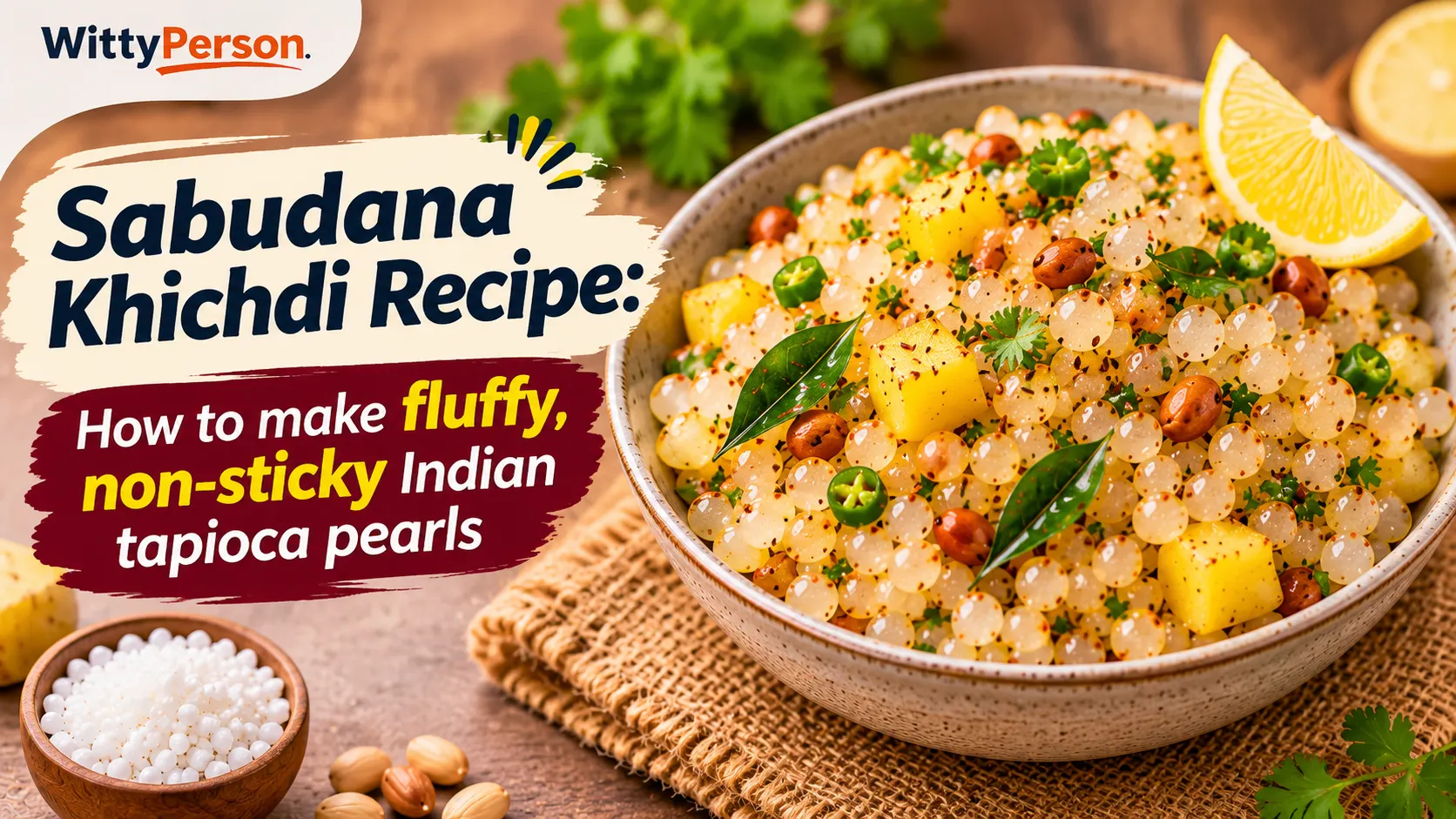
This sabudana khichdi recipe turns soft tapioca pearls, roasted peanuts, boiled potatoes, green chilies, and a squeeze of lemon juice into an easy Indian meal.
Sabudana khichdi is especially popular on religious fasting days such as Navratri and Ekadashi, but you don’t have to be fasting to enjoy it. It also makes a good breakfast, brunch, or light dinner when you want a change from your usual meals.
Everything depends on how you prepare the tapioca pearls. If you soak them in too much water or cook them too long, they turn sticky and clump together. Rinse them well, soak them in just enough water, and cook them briefly, and they stay soft, fluffy, and separate.
What is sabudana khichdi?
Sabudana khichdi is a traditional Indian dish made with sabudana, also called sago or tapioca pearls. The small, round pearls are made from processed cassava starch and turn soft and slightly translucent once soaked and cooked.
Cooks usually combine the soaked pearls with boiled potatoes, roasted peanuts, cumin seeds, green chilies, curry leaves, and fresh herbs. The dish is popular in Maharashtra and other parts of western and northern India, where families often make it during fasting periods.
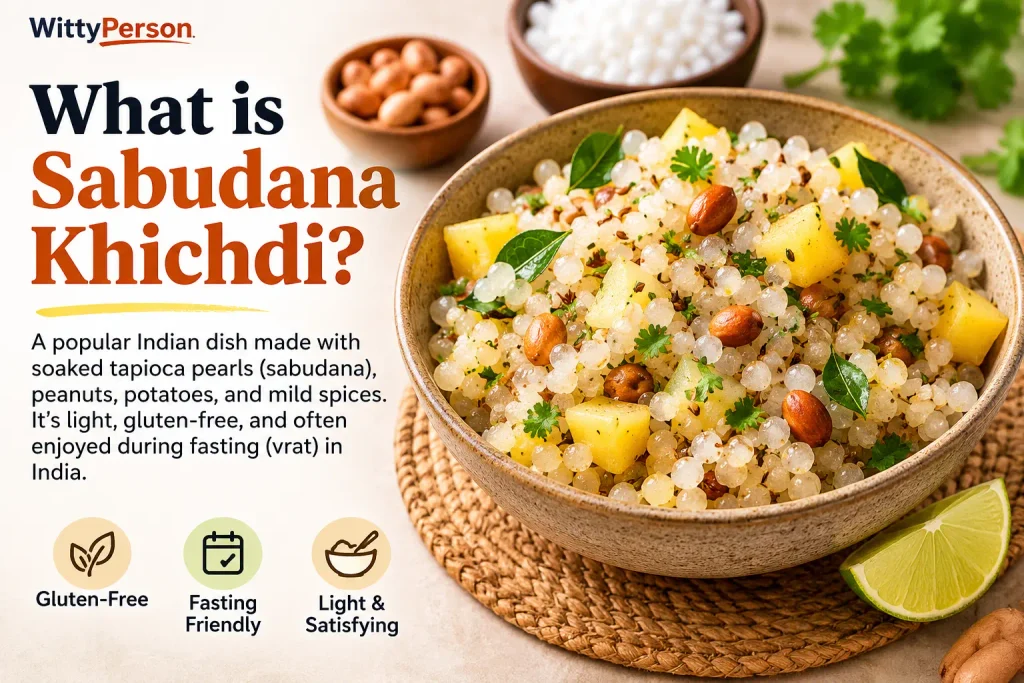
In the USA, look for sabudana at Indian grocery stores, where it may be labeled sabudana, sago, or tapioca pearls. Buy the small pearls sold for Indian cooking, not the large boba pearls used in bubble tea.
Why this sabudana khichdi recipe works
- The ingredients are simple and the method is beginner friendly.
- Sabudana is made from cassava starch, so it is naturally gluten-free.
- Made with rock salt and fasting-friendly ingredients, it suits fasting days.
- Roasted peanut powder absorbs excess moisture and keeps the pearls separate.
- You can adjust the green chilies, lemon juice, and peanuts to taste.
- It is vegetarian, and it becomes vegan if you cook with oil instead of ghee.
What are the ingredients for sabudana khichdi?
The ingredient list is short, and an Indian grocery store will have most of it.
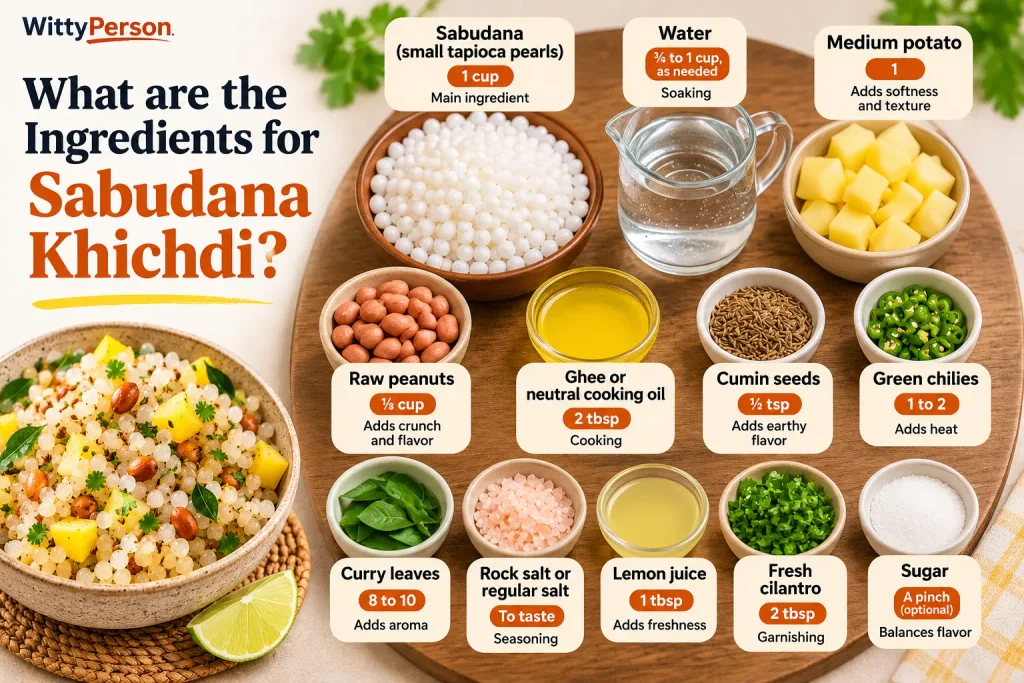
Main ingredients
| Ingredient | Quantity | Purpose |
|---|---|---|
| Sabudana (small tapioca pearls) | 1 cup | Main ingredient |
| Water | ¾ to 1 cup, as needed | Soaking |
| Medium potato | 1 | Adds softness and texture |
| Raw peanuts | ⅓ cup | Adds crunch and flavor |
| Ghee or neutral cooking oil | 2 tbsp | Cooking |
| Cumin seeds | ½ tsp | Adds earthy flavor |
| Green chilies | 1 to 2 | Adds heat |
| Curry leaves | 8 to 10 | Adds aroma |
| Rock salt or regular salt | To taste | Seasoning |
| Lemon juice | 1 tbsp | Adds freshness |
| Fresh cilantro | 2 tbsp | Garnishing |
| Sugar | ½ tsp (optional) | Balances the flavors |
Ingredient notes
Choose medium or small sabudana pearls. Brands absorb water differently, so soaking time varies.
Roasted peanuts give the dish its traditional flavor. Crush some of them into a coarse powder to help keep the pearls from sticking.
Use boiled potatoes cut into small cubes. They should be cooked through but firm enough to hold their shape.
Ghee gives a rich, traditional flavor. Use a neutral cooking oil for a vegan version.
If you’re making this for a religious fast, use the type of salt your fasting tradition permits.
How to make sabudana khichadi step by step
Once you know how to soak the pearls, the rest of the recipe is straightforward.
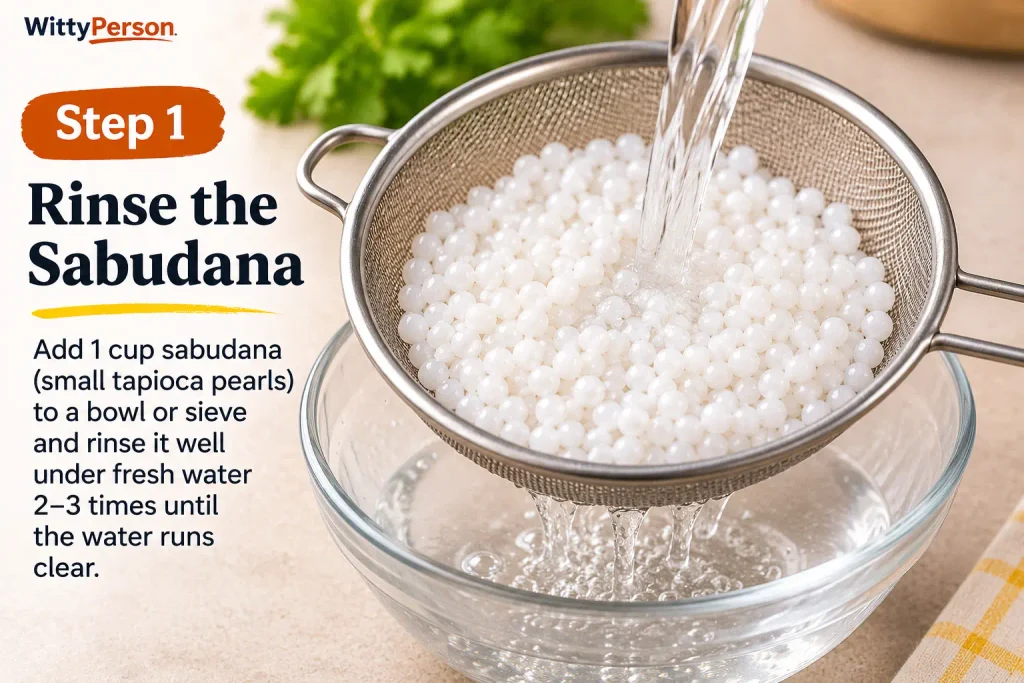
Step 1: Rinse the sabudana
Put 1 cup of sabudana in a large bowl, cover it with water, and gently rub the pearls between your fingers. Drain the cloudy water and repeat two or three times, until most of the surface starch is gone. Starch left on the pearls makes them stick together when cooked.
Step 2: Soak the tapioca pearls
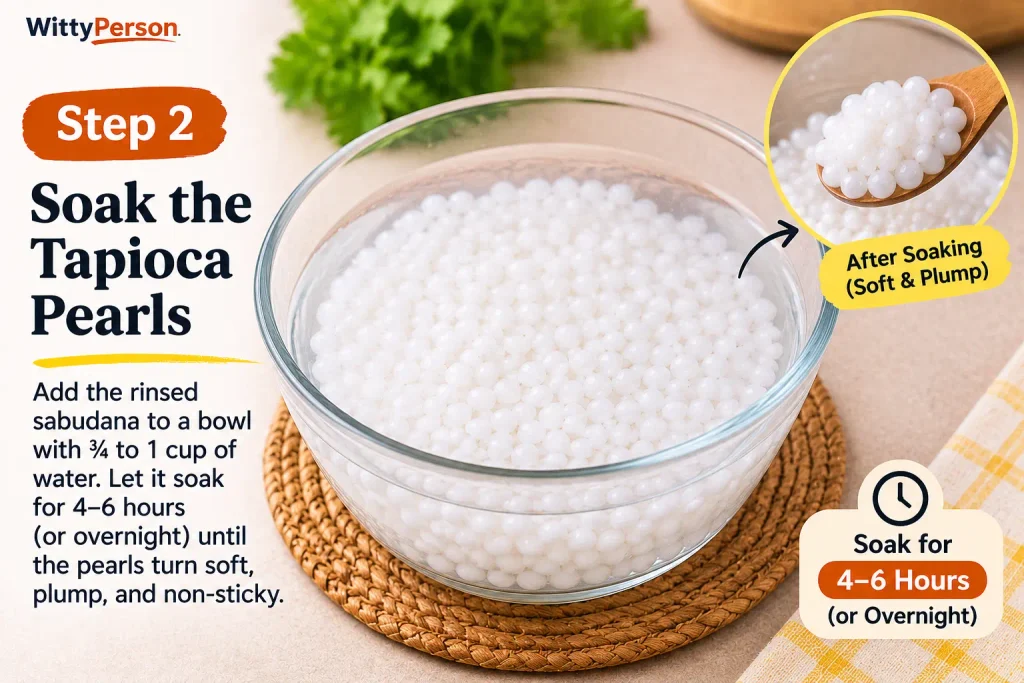
Add about ¾ cup of fresh water to the rinsed sabudana. The right amount depends on the brand and size of the pearls. Cover the bowl and soak for 4 to 6 hours. Some varieties need longer, so check the package if it gives instructions.
The pearls should be soft and nearly double in size. To test one, press it between your thumb and index finger. It should mash easily with no hard center. If the pearls are still hard, sprinkle a little water over them and soak a while longer.
Step 3: Drain the excess water
Transfer the soaked sabudana to a fine-mesh strainer or colander and let it drain for 10 to 15 minutes, until no water is left. Extra moisture can make the khichdi sticky.

Step 4: Roast and crush the peanuts
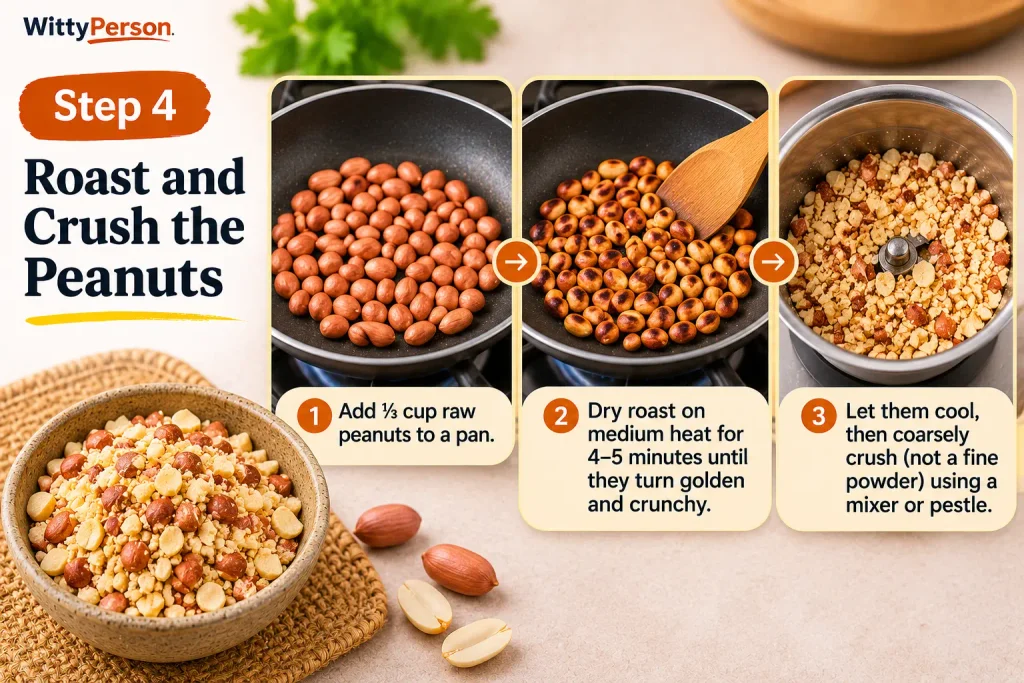
Heat a small pan over medium heat and dry roast the raw peanuts until lightly golden and fragrant. Let them cool, and remove the skins if you like. Crush about half of the peanuts into a coarse powder and leave the rest whole. The powder absorbs moisture and keeps the pearls separate.
Step 5: Prepare the potatoes
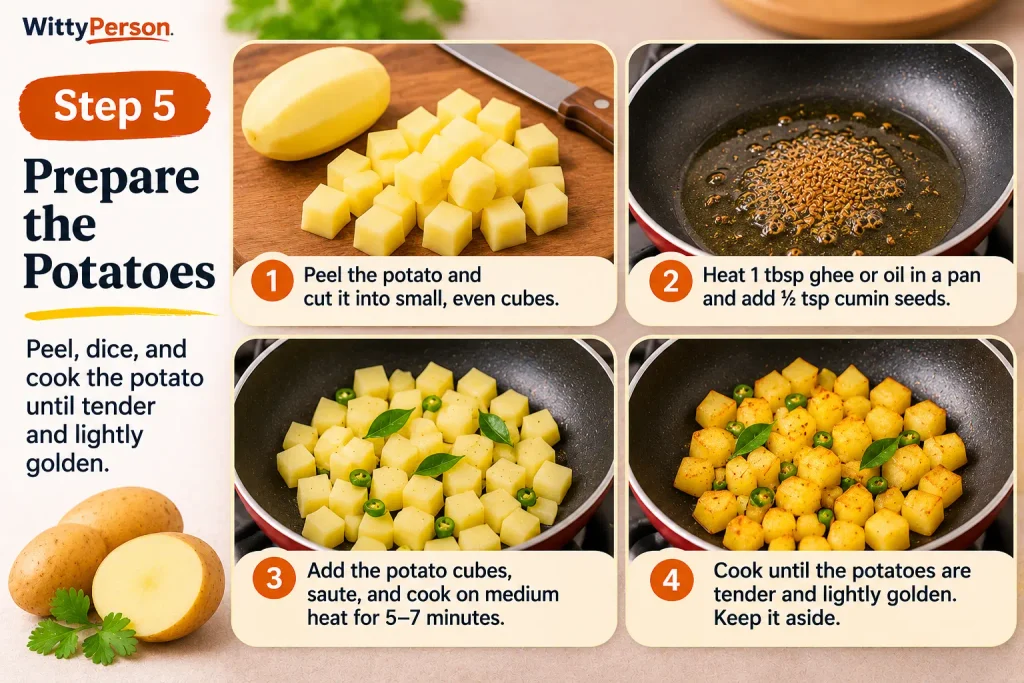
Boil one medium potato until tender but not mushy. Let it cool slightly, then peel it and cut it into small cubes. An overcooked potato falls apart when mixed with the sabudana, so stop while it still holds its shape.
Step 6: Make the tempering
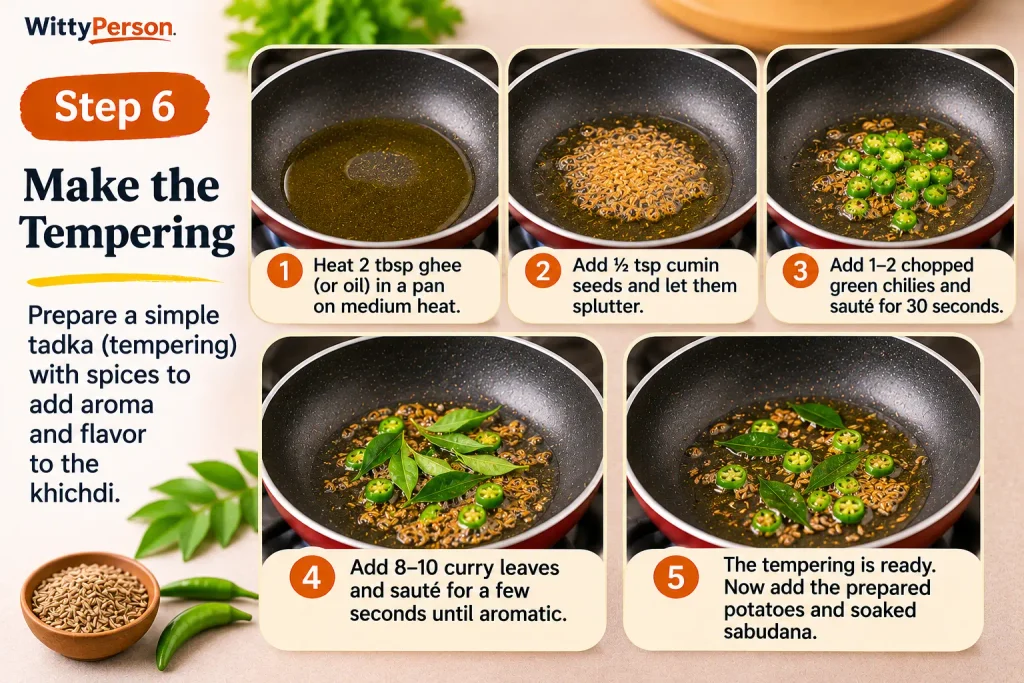
Heat 2 tablespoons of ghee or cooking oil in a non-stick pan over medium heat. Add the cumin seeds and let them sizzle, then add the chopped green chilies and curry leaves and cook for a few seconds, until fragrant. Add the potato cubes and cook for 2 to 3 minutes, stirring gently.
Step 7: Add the sabudana and peanut powder
Turn the heat to low and add the soaked sabudana, the peanut powder, the salt, and the sugar if you’re using it. Mix gently until everything is combined. Pressing or stirring hard breaks the pearls and makes them mushy.
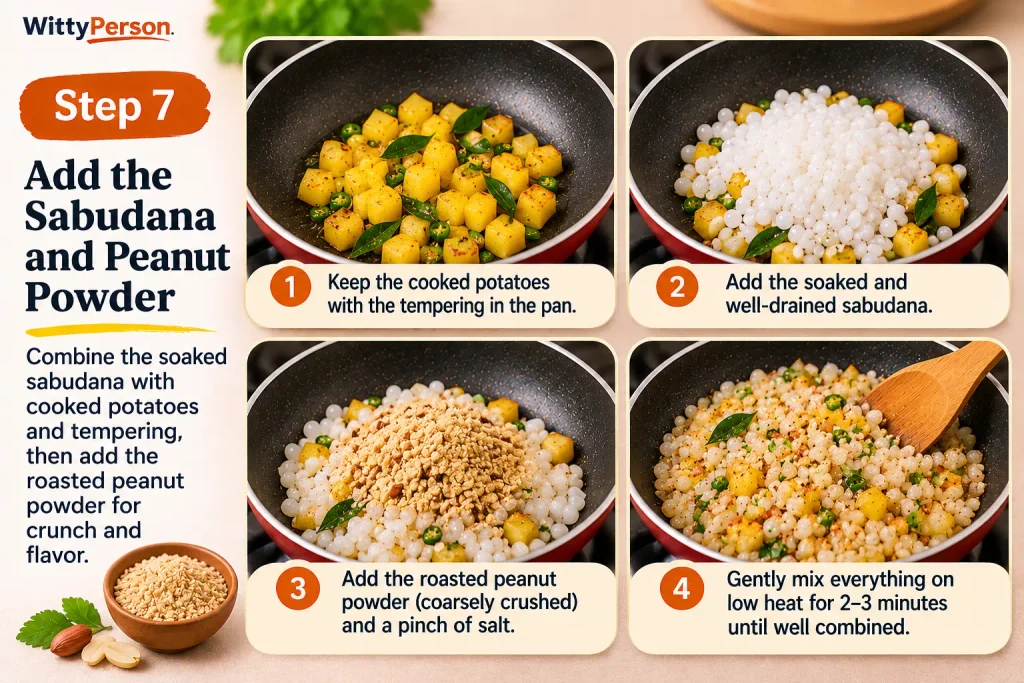
Step 8: Cook until the pearls turn translucent
Cook for 3 to 5 minutes, stirring occasionally. The pearls gradually turn translucent while staying soft and slightly chewy. Turn off the heat once most of them are translucent and cooked through. Cooking them longer makes them sticky.
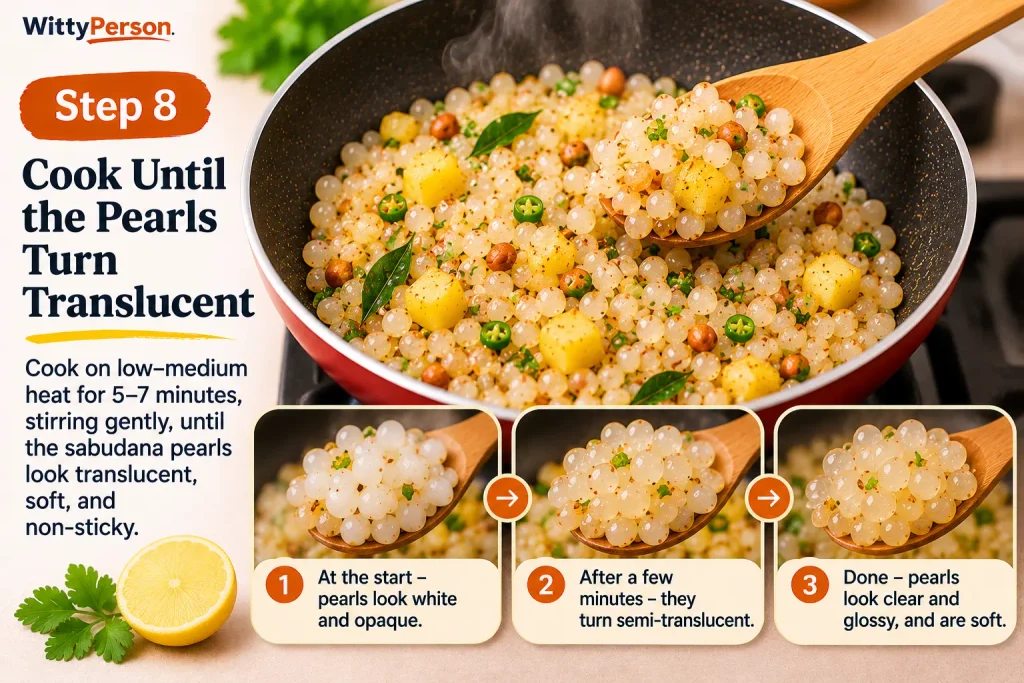
Step 9: Add lemon juice and garnish
Stir in the lemon juice, the whole roasted peanuts, and the chopped cilantro. Taste and adjust the salt or lemon juice.
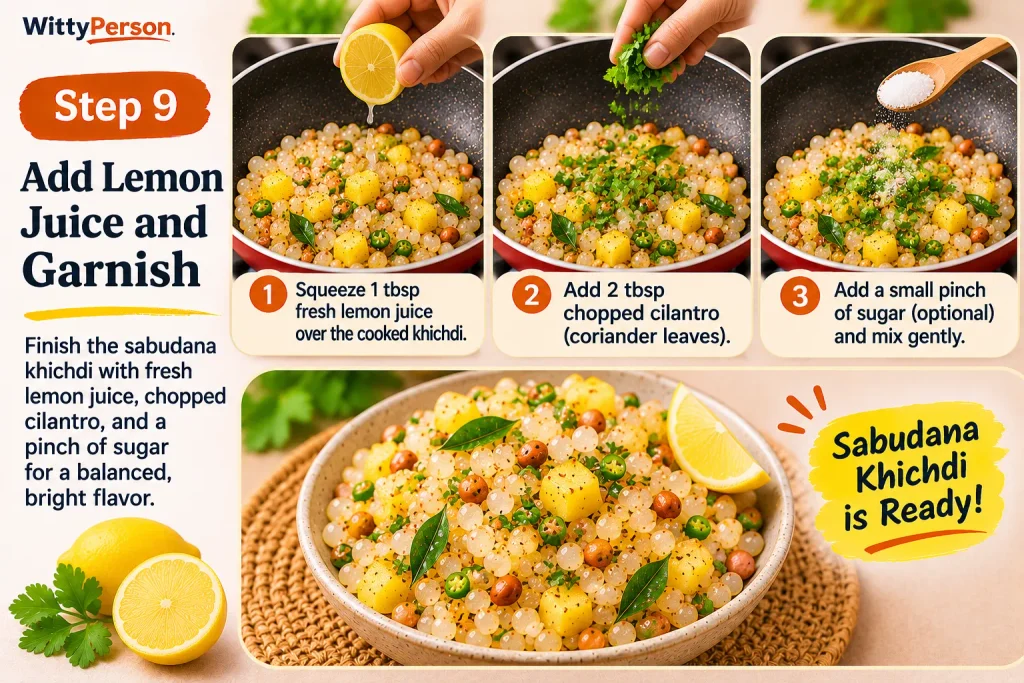
Step 10: Serve warm
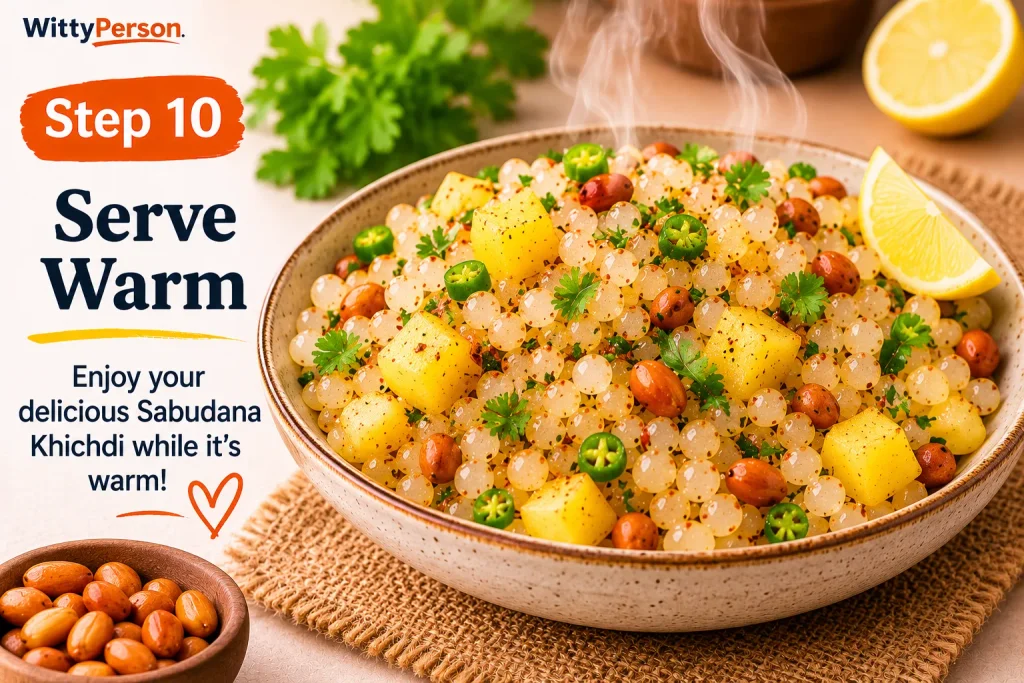
Spoon the khichdi into a serving bowl and serve it warm with plain yogurt, a cup of chai, or fresh fruit.
Tips for non-sticky sabudana khichdi
Sticky, mushy pearls are the most common problem with this dish.
- Rinse the pearls two or three times before soaking to remove surface starch.
- Use about ¾ cup of water per cup of sabudana, and adjust to how much the pearls absorb.
- Before cooking, press a pearl between your fingers. It should mash easily with no hard center.
- Drain off all the soaking water before the pearls go into the pan.
- Add coarsely ground roasted peanuts to absorb moisture.
- Cook in a non-stick pan, which makes stirring easier and keeps the pearls from sticking to the bottom.
- Cook only until the pearls turn translucent and soft.
- Stir lightly so the pearls don’t crush.
Is sabudana khichdi healthy?
Sabudana khichdi can fit into a balanced vegetarian diet, depending on the ingredients and the portion. Sabudana is mostly carbohydrate and gives quick energy, but it is relatively low in protein and fiber. The peanuts add plant-based protein and healthy fats, and the potatoes add carbohydrates and some potassium. Lemon juice and cilantro season the dish without heavy sauces.
For a more balanced meal, serve it with plain Greek yogurt for extra protein, and adjust the ghee, oil, and peanuts to your needs. The dish is energy dense, so portion size matters.
Sabudana khichdi nutrition facts
Approximate values per serving, assuming the recipe makes four servings:
| Nutrient | Approximate amount per serving |
|---|---|
| Calories | 335 kcal |
| Total carbohydrates | 50 g |
| Protein | 5 g |
| Total fat | 14 g |
| Saturated fat | 6 g |
| Dietary fiber | 4 g |
| Sugar | 5 g |
| Sodium | 450 to 950 mg |
Nutrition values are estimates, not laboratory-tested results. Actual values depend on the brand of sabudana, amount of oil or ghee, peanuts, salt, and serving size.
Variations
Sabudana khichdi for fasting
For fasting, use rock salt (sendha namak) and only ingredients your fasting tradition allows. Keep the seasoning to cumin, green chilies, potatoes, and peanuts.
Vegan sabudana khichdi
Use vegetable oil or another plant-based oil instead of ghee. Everything else is already vegan.
Sabudana khichdi with vegetables
If you’re not fasting, stir in a small amount of carrots, peas, or other vegetables for extra color and nutrients.
Spicy sabudana khichdi
For more heat, add an extra green chili.
Coconut sabudana khichdi
Stir in 1 to 2 tablespoons of freshly grated coconut toward the end of cooking for a slightly sweet, nutty flavor.
What to serve with sabudana khichdi
Serve sabudana khichdi warm. Plain yogurt and cucumber raita cool down the spice, and the raita makes it a more filling meal. Sliced bananas, apples, or other seasonal fruit work on the side, and masala chai suits a breakfast serving. Keep lemon wedges on the table for anyone who likes it tangier.
How to store and reheat sabudana khichdi
Sabudana khichdi is best fresh, while the pearls are soft and slightly chewy. Let leftovers cool, put them in an airtight container, and refrigerate them promptly. Eat them within 2 to 3 days.
To reheat, warm the khichdi in a non-stick pan over low heat with a tablespoon of water, covered, until heated through. You can also microwave a portion in a microwave-safe bowl in short intervals, stirring between each one. Reheat only the portion you plan to eat, since repeated reheating of the whole batch affects the texture.
Frequently asked questions about sabudana khichdi
How to make perfect sabudana khichdi?
Rinse the tapioca pearls two or three times before soaking. Use just enough water to soften them, usually around ¾ cup per cup of sabudana, and soak for 4 to 6 hours. Drain the excess moisture, add roasted peanut powder, and cook over low to medium heat until the pearls turn translucent. Don’t overcook them or add extra water.
How many hours should I soak sabudana to make khichdi?
Most medium pearls need about 4 to 6 hours. The exact time depends on size, quality, and brand, and some varieties need overnight soaking. Check the texture before cooking: properly soaked pearls mash easily between your fingers.
Is sabudana khichdi healthy or not?
Yes, in moderation. It gives you carbohydrates for energy, and the peanuts add protein and fat. Sabudana itself is low in protein and fiber, though, and the dish can be high in calories depending on how much ghee, oil, and peanuts you use. Keep portions moderate and pair it with a protein-rich side such as plain Greek yogurt.
Is 2 hours enough to soak sabudana?
Two hours can be enough for some small or quick-soaking varieties, but not for every type. Larger pearls usually need more time. Press a few between your fingers. If they still have a hard center, keep soaking and check again before cooking.
Final thoughts
Four things decide how this sabudana khichdi turns out: rinse the pearls well, use just enough soaking water, add roasted peanut powder, and stop cooking once the pearls turn translucent. Whether you’re making a sabudana khichdi recipe for fast, a Navratri meal, or an Indian breakfast, serve it warm with yogurt and a squeeze of lemon juice.
Author

piyushsaini31@gmail.com
Related Posts
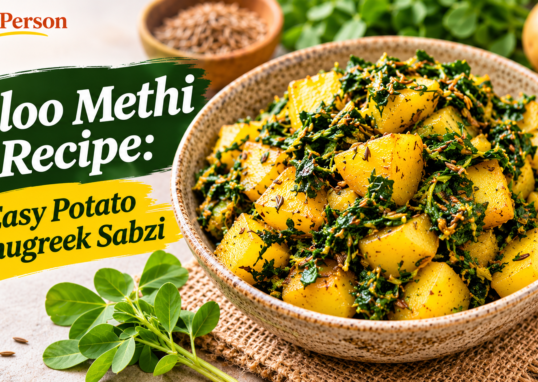
Aloo Methi Recipe: Easy Potato Fenugreek Sabzi
- 0
- 1,260 word
This aloo methi recipe pairs tender potatoes with fresh fenugreek leaves, cumin, garlic, and a few everyday spices. It cooks in one...

What is chai? A complete guide to Indian tea, ingredients, flavor and homemade recipe
- 0
- 1,872 word
If you’ve ordered a chai latte at a coffee shop or seen chai on a tea menu, you may have wondered how...

What Is Paneer? A Complete Guide to Indian Cheese, Nutrition & Homemade Paneer Recipe
- 0
- 1,877 word
What Is Paneer? Paneer is a fresh, mild cheese used throughout Indian cooking. You can grill it, pan-fry it, or simmer it...

Easy Pancake Recipe: Fluffy Homemade Pancakes From Scratch
- 0
- 1,510 word
This easy pancake recipe makes soft, fluffy homemade pancakes with golden edges from ingredients most kitchens already have. The batter takes about...

Chicken Vindaloo Recipe: Easy, Tangy & Spicy
- 0
- 1,290 word
Chicken vindaloo pairs tender chicken with garlic, warm spices and a sharp vinegar tang. This version uses familiar US ingredients, and you...

What is espresso? Everything you need to know about espresso coffee
- 0
- 1,702 word
Almost every coffee shop in the United States has espresso on the menu. Cappuccinos, lattes, iced Americanos, and caramel macchiatos all start...